Hello! I've begun a new blog and I'd like to help you find it.
If you go to my website www.christinagrant.com and click on "Holistic Woman Blog" on the menu, you'll get there.
Or, go straight to www.holisticwoman.org. You can "Subscribe" to receive my blog updates via email if you'd like, or just return frequently to see the latest.
I'll no longer be posting anew on this site. See you over at the new place!
October 8, 2012


October 2, 2012
Change of Venue Coming Soon
Hello! You can see I haven't posted recently on this blog. I've been setting up a new Dr Grant Holistic blog which will have shorter, but informative posts about holistic healing. It's almost ready and as soon as it's live, I'll post the link to it here.
I've been working on my book, and it's off being read by my "readers" so I can get important feedback before I send it off to the publisher. This book is for women who want a holistic approach to healing breast cancer. I've been researching holistic cancer prevention for over 20 years, and my book is also perfect for women who want to be pro-active in prevention of breast disease.
I'm setting up a second blog, too! It is oriented to women who want to live a more holistic life, and perhaps heal from dis-ease or disharmony in their body, mind, or spirit. I'm very excited about this new blog. So come back shortly to get the links to my new blogs. I expect both blogs to be live by the end of the week!
I've been working on my book, and it's off being read by my "readers" so I can get important feedback before I send it off to the publisher. This book is for women who want a holistic approach to healing breast cancer. I've been researching holistic cancer prevention for over 20 years, and my book is also perfect for women who want to be pro-active in prevention of breast disease.
I'm setting up a second blog, too! It is oriented to women who want to live a more holistic life, and perhaps heal from dis-ease or disharmony in their body, mind, or spirit. I'm very excited about this new blog. So come back shortly to get the links to my new blogs. I expect both blogs to be live by the end of the week!
July 17, 2012
Dog Scoop
 If you're a newcomer scheduling an in-person appointment, know that I have a dog - a large, rambunctious Labrador/German Shepherd - 5 years old. When you arrive he will greet you in a very exuberant manner, giving you a thorough sniffing, possibly stealing a kiss on your lips (especially if you're a gorgeous blond... go figure), but never will he let you by without checking you out first.
I used to be very concerned about how this might seem to the people who come to see me. I worked continually with my boy, spending more money and time on training him than I can reveal. And here is the bottom line. He's not going to be better trained at the door. This is it.
But he's wonderful and smart and loving and lives every moment as if life really matters. I just advise you don't wear your Sunday best. Be comfortable and ready to receive a big lovable greeting. It lasts about 60 seconds and if you let yourself, you'll feel happier afterward. All this enthusiasm at the door is followed by a dog nap with occasional snoring while you and I have our session time.
Love me, love my dog. It's like that around here.
March 16, 2011
Maintaining Balance in Uncertain Times

I’ll make sure this doesn’t become another CNN news piece. People are suffering from more anxiety and worry than ever before without my rehashing the obvious. So let’s get to the business of wellbeing, and how to maintain it in the midst of crisis.
I’m a proponent of being aware of how grounded you are. This means, literally, how connected to the earth are you? What is your relationship to the ground?
In a state of ungroundedness you can be more easily influenced by others, you might experience injuries and accidents, feel anxiety, panic, worry, irritability, and foggy thinking. Because being ungrounded feels bad, many people overeat, drink too much, or otherwise find a way to “check out.”
Especially in these unusual times, it’s more important than ever to be mindful of when you are not grounded, centered, and calm. You can then, with conscious awareness, bring yourself back into a state of balance.
How to do it? The first step is to pay attention to your physical body. How does the chair feel that you are sitting in? What do your feet feel like? What physical signs or symptoms are you trying to ignore? For example, are you thirsty? Do you have any pain or tightness in your body?
Then, notice your breathing. This will bring you “back into your body.” Most cases of anxiety I see in my practice are nothing more than being mentally and energetically disconnected from the body. So take a few moments and follow your breath. Bring it into your belly. Slow it down. Lengthen your breath. Do this several times throughout the day.
Connect with the earth. Put your bare feet on the ground. There is scientific evidence that the earth balances your energy field. But you don’t need proof from science when you can just do it and see for yourself. Stand or sit down for a minute with your bare feet on the earth. Do this often.
Be with nature. Notice the weather. What is happening in your natural environment? Feel the breeze, smell the earth’s scents, take note of how the sun feels, watch the trees become full of leaves again. Imagine yourself as a big healthy tree with deep roots going into the earth.
How about if we all make an effort to bring ourselves into a state of balance? There are many changes occurring in our lives, and we want to flow with them and come out on the other side unscathed. Here are a few reminders to help you.
Quick Tips on Becoming More Balanced
Breathe with awareness
Sit in nature
Watch the sun rise or set
Place your feet (and hands) on the earth
Eat food from the earth
Be aware of your surroundings
Notice physical symptoms or signs
Stop, Look, and Listen
Visualize yourself rooted into the earth
February 3, 2011
A Practical New Book for Insomniacs: Master Your Sleep

What has happened in our society where people cannot rest properly? There are more folks awake in the middle of the night than we can imagine, tossing and turning, staring at the ceiling, chronically sleep-challenged.
We know that many more than this 100 million have occasional or frequent bouts of insomnia, causing frustration and even dread. Aside from a sense of helplessness, what is this doing to one’s ability to think clearly, be alert, and have energy throughout the day? To keep the immune system functioning? How are these millions managing on the job? Emotionally?
Dr. Marks says insomnia is underlying many quality of life issues such as anxiety and burnout. It also puts people at risk for weight gain, diabetes, heart disease, compromised mental abilities, and shortened lifespan.
What are your options if you are one of the 100 million with a bona fide sleep disorder? Or, even if you are an occasional insomniac? Pills aren’t the definitive answer. If taking sleep medication worked over time, returning you to the type of sleep required for good health and mental balance, the problem would be easier to solve. But this isn’t the case. Pharmaceutical and over-the-counter drugs have their drawbacks, as do natural and herbal remedies.
In her new book, Master Your Sleep, Dr. Marks outlines numerous simple methods that support the body to fall asleep at bedtime and wake up refreshed. She has an easy-to-read, straightforward style with a refreshingly sensible and practical approach. Her prescription for a “sleep hygiene” program encourages the body and mind to accept a more healthful sleep pattern. As an added bonus for parents, she discusses what to do if your children have sleep troubles.
I always appreciate an expert that can offer sound advice with the goal of addressing underlying issues. That is what Dr. Marks does in her new book. So, for those of you who find yourself looking up at the dark ceiling more often than you care to, get a copy of Master Your Sleep: Proven Methods Simplified and follow the advice of Dr. Marks. Meanwhile, consider doing my favorite of her suggestions: take the laptop out of the bedroom and keep your computer activities in another room.
The Optimist’s Path

A friend and I were talking about the concept of good health being related to a positive mental attitude. My view was that a positive outlook is a healthier way to live and can even prevent illness. But he countered with something interesting. He said, “Some of the nastiest, most negative thinking people I’ve known have lived to be very old.” Once I thought about this, I had to agree - I’ve seen this too.
Although we’ve all known a difficult, cantankerous person who lived to old age, I still believe keeping a positive focus is important for physical, mental, and spiritual wellness. I like what Dr. Karl Menninger said, a founder of the Menninger Clinic and proponent of blending psychiatry and medicine: “Set up as an ideal the facing of reality as honestly and as cheerfully as possible.”
Why go the opposite route? It’s apparent that many of us choose the path of complaining and misery, but why? About complaining, a wise teacher I once had said, “It’s self-correcting. One eventually sees the futility of one’s own negativity, although this may take many lifetimes.” I found this to be an interesting way to look at it: we are all evolving and one of the roads in our travels is the road of pessimism!
I’d like to think I traveled that road long ago, but things happen and sometimes it just feels really good to get right into the center of the mud pile and complain about everything. If we can be aware of the moment we choose to jump into the mess, and also be a little practiced in how to climb back out and clean off, then once in awhile maybe we can be excused and just indulge. Griping is an indulgence, after all.
Affirmations are one way to help your mind stay focused on the positive and also to help dig yourself out of the mud pile once you’ve had your fun in there. I encourage you to set up your own self-fulfilling prophecies. Listed below are a few you can use to get you on your way.
I make conscious, positive choices
I have the kind of inner fortitude that survives and succeeds through anything
I live in true comfort and joy
I have a healthy vibrant body and mind
I forgive myself for everything
I am open to positive change
I flow easily with change
My own well-being is my top priority
Optimum health is mine now and always
I am fully loved
My body knows how to heal itself
I am completely healthy in every way
Every day I’m feeling happier
I am alive and healed on all levels
I remain in balance, steady, strong, peaceful
I have a lot of options
I have many opportunities
My life is filled with harmony
You can write them out, print and post where you can see them, choose one that resonates with you and put it on your refrigerator, or make a list of your own. Either way, you’re mental focus will be improved and, according to the latest studies on mind-body wellness, you will be healthier and happier.
January 10, 2011
Healing with the Mind

An American named Edgar Cayce (1877-1945) was nicknamed “The Sleeping Prophet” for his ability to enter a sleep-like state and answer the health questions of thousands of people who came to him for answers. Although he died 65 years ago, his teachings are widespread today, with hundreds of books written about him and his work. The Association for Research and Enlightenment in Virginia Beach continues to teach what he brought forth from his trance state.
Although there are thousands of valuable pieces of information collected from his work, there is a theme that runs through his teachings. Cayce placed an emphasis on keeping a balanced mental attitude in order to maintain wellness. In one of his readings he said, “Through diet and exercise the greater portion of all disturbances may be equalized and overcome, IF the right mental attitude is kept.”
Cayce also said, “What we think and what we eat – combined together – make what we are, physically and mentally.” The question then becomes how do we maintain the right mental attitude and turn our minds toward thoughts that heal? Can this become a habit and if so, how?
The first step is to have an ongoing practice of noticing and managing your thoughts. This isn’t easy to do if you’re addicted to the television culture, where mass media sends a never ending stream of negative concepts into your brain. Or, if you like to get online and read the daily headlines followed by stories of horrific occurrences around the world. Or, if you like to “trauma share” with friends and colleagues about the annoying things that happen to you.
In the case of serious physical illness, we might find ourselves in a doctor’s office listening to negative possibilities and statistics that don’t sound promising. Because we are susceptible to these predictions, we often believe the bad news and accept it as fact when it isn’t. This can hinder the ability to heal because the mind is powerful enough to create what it believes.
We hear stories about people on their “deathbeds” whose families don’t tell them what the doctors have said about their dire situation. The person gradually gets well and goes on to live a full life. The mind didn’t have the opportunity to grasp onto the negative concept of doom, and instead believed in wellness. Our inability to really integrate this into mainstream medicine is a huge hindrance to our nation’s overall health and wellbeing. If we were masters over our own minds we could enhance and improve the entire medical system.
There are very few more important things you can do than to shift your mind to the positive. Any negative thought can be transformed by focusing on its opposite. Writing down the opposite thought, even drawing it out, helps change the negative thought pattern. Notice what you think about. Are you hooked in to the latest gory or fear-based story on the nightly news? Do you have people around you who enjoy talking in negative terms, going over and over the same dark topics? Do you do this yourself? If so, noticing these times and making an effort to change them is your path to making a positive mind a habit.
The best conversation I had over the past holidays was with a friend at a dinner party who said, “I’m focusing all of my attention on seeing the best in people. I’m simply not talking negative about things. My challenge is to practice this even when others around me are being negative.” Isn’t that the challenge for us all.
That was one conversation I’ve had lately that could have carried into the wee hours of the morning. When you find another person who’s on board with you, it is inspiring, uplifting, and life-affirming. This is where true healing begins.
Clean Up Toxic Indoor Air

These toxins are on floors, walls, countertops, beds, furniture, towels, clothing, and are applied directly to the skin. What happens in your body when they enter your bloodstream? Do they accumulate or combine together to become more potent? Do they cause rashes, allergies, respiratory problems, headaches, liver, kidney, and brain damage while assisting mutant cells in their quest to multiply? In many cases, yes they do. This is why we must think for ourselves when it comes to using these products.
The other day I saw a television commercial showing an attractive woman spraying an “air freshener” around her living room and on her sofa. Later, I saw another advertisement for a so-called air freshener that releases a mist when someone walks by. Since perfume, cosmetics, and scented items are heavily advertised by beautiful people on television and in print, their use seems perfectly normal, however, it is far from desirable.
A well-scented, squeaky-clean home and body is lovely. But to obtain both from harsh chemicals is damaging to humans and animals, not to mention expensive. The majority of products cause toxic indoor air quality that is worse than outdoor air pollution. Commercial air “fresheners” themselves contain volatile organic compounds (VOCs), many of which have been proven to cause cancer. You might as well spray acetone, isobutene, propane, petroleum distillates, toluene, tar, lead, arsenic, radon, and even ozone into your breathing space.
Many years ago I took a day and did a massive review of products in my house. I threw out trash cans full of toxic junk, much of it expensive department store cosmetics and perfumes along with far too many cleaning supplies. I also tossed scented candles and all those lovely smell-good bath and body products.
I began to search for organic, toxin-free replacements. There were virtually none in large department stores, boutiques, drug or grocery stores, which themselves smell of a harsh mix of chemicals from the goods they sell.
I learned to live with very few products. Shopping is simple, I’ve saved thousands of dollars and have taken a toxic load off my body. My number one household cleaning product? A large, inexpensive bottle of white vinegar which I mix with water and use for general cleaning.
As for air fresheners, if you can’t simply open windows and let fresh air inside then use an air purifier. If you want a great scent on yourself or in your house, use 100% pure essential oils that come from plants, trees, or flowers. You can also use an essential oil diffuser or mix a few drops of essential oils into a spray bottle filled with distilled water. Bring in green plants which naturally purify the air.
With the New Year here, it’s the perfect time to address your indoor air quality. How about making 2011 the year you become nontoxic? When you want to know about ingredients in any household product, see the Household Products Database maintained by the National Institutes of Health: www.HouseholdProducts.nlm.nih.gov or get the Material Safety Data Sheet (MSDS) from the manufacturer’s website and look at the list of hazardous ingredients.
Learn more by reading How Everyday Products Make People Sick: Toxins at Home and in the Workplace by Paul D. Blanc. Note that many products labeled “all natural” and “organic” are just as toxic as the conventional ones. To learn more about natural cleaning solutions, including alternatives to bleach, read Organic Housekeeping by Ellen Sandbeck.
December 28, 2010
A Twist on Your New Year’s Resolution

Perhaps Edith Lovejoy Price explained our New Year’s quest for a fresh slate when she said, “We will open the book. Its pages are blank. We are going to put words on them ourselves. The book is called Opportunity and its first chapter is New Year's Day.”
As the old year ends, we look to what changes we can make for a better new year. We resolve to begin this change January 1st on a clean slate. But as January gets underway, declarations begin to fade. Whether to exercise more, stop smoking, drink less, eat better, stop buying lattes, save money, recycle, conserve gas, or be more attentive with family, they leave a mild sense of defeat in their wake.
Oprah Winfrey said, “Cheers to a new year and another chance for us to get it right.” This “getting it right” links to a desire to feel good, both about yourself and your life.
So it’s interesting to note that New Year’s resolutions often involve giving up something you like (smoking, alcohol, lattes, shopping) or adding into your life something not wanted (more salads, regular visits to the gym, phone calls to mom every Sunday). No wonder it’s said a “New Year’s resolution goes in one year and out the other.”
After all, we are meant to follow our bliss, find our joy, be creative, live with a sense of purpose. When we don’t, we find ourselves on the psychiatrist’s couch or in the doctor’s office, unfulfilled.
The premise of the typical New Year’s resolution is to do something new that improves life, but in fact, it often is destined for failure because it is in conflict with what you truly want. One way to be more successful is to focus on how you want to feel.
Let’s assume you want to feel energetic, healthy, happy, and safe. You want to feel loved by others while having compassion toward them. Alter your idea that you have to do something significant in order to get there.
Focus more on the “what” rather than the “how.” It’s likely counter to what you’ve been taught. Most of us are taught to go out and make things happen, often when we aren’t clear on what underlies the desire to make them happen in the first place.
Many people are living lives they think they want, yet they are unhappy. They haven’t stopped to ask themselves how they want to feel each day. This is why resolutions get dropped like hot potatoes. They don’t feel good.
If you resolve to lose weight, first determine how you want to feel. Simply wanting to lose weight isn’t enough. Do you want to feel more energy? Do you want to feel more loved and accepted by society? Do you want to feel happy? Are you afraid your health is suffering and you want to feel more secure that your weight is just fine? Get clear on your intention around losing weight then focus on that intention. Make how you want to feel in the coming year the focus of your New Year’s resolution, rather than simply losing weight.
If you want to save money, go to how you want to feel first. What is it about saving money that feels good? A sense of security? Excitement? An inspiring challenge?
If you want to quit smoking, how do you want to feel every day? Peaceful? Calm? More loved?
Determine the underlying feeling you want to experience. Turn this into your resolution. This clarity will help make it happen. It’s not something you can drop that easily because you truly want it. It’s always there, beckoning you.
December 2, 2010
Preparing for Mercury Retrograde December 10th through 30th

Wherever you stand on whether the ancient issue of astrology has value, this planetary event has become quite popular in the mainstream. Let’s find out why.
Mercury’s domain is the mind, perception, education, and transportation. When going along as normal, it helps us think and communicate. The retrograde period, which lasts around 21 days and occurs 3-4 times every year, doesn't mean the planet reverses its orbit, but it seems to from our vantage point. Mercury appears to initially slow down, stop, then go backwards.
With awareness, we can see how this apparent retrograde motion affects our lives.
Mercury retrograde is blamed for malfunctioning computers, derailed plans, delays, and confused communications. Invariably, you’ll find people mixing up appointments, arriving late or early, or forgetting things altogether.
Weird things can happen during the retrograde, and Mercury is already known as the “Trickster.” He seems to enjoy watching people slip on his banana peels. For instance, you buy a home but someone else’s name ends up on the title and it takes a year to correct. That happened - to me. It’s best not to sign permanent documents or make large purchases while the Trickster is retrograde.
Another example: it’s pointed out once you’ve flown to your vacation destination that your driver’s license will expire in two days, therefore, the car rental agency cannot give you a car nor can you get through security to get back home. You’ll spend hours of your time talking to the wrong people about getting an extension faxed to the hotel, but it will take inordinate effort to explain why it must be faxed and why you were not responsible enough to renew your license in the first place. That happened, also to me.
Remember when President Obama had to re-do the oath of office? Mercury was retrograde. And the health bill that needs revising again and again? It was introduced during Mercury retrograde. Astrologers were shaking their heads. It’s ancient wisdom to wait on final agreements until Mercury turns direct.
Ideally, a retrograde period is for review. It’s the perfect time to ponder or research a major purchase or document, or revise something you’ve been working on. The mind wants to rest from its normal push forward and take time to reflect. Otherwise, we can experience frustration, misunderstandings, and confusion.
If in the flow, we would be more introspective and meditative during this time. However, in our modern society, we are generally out of touch with these natural rhythms and most of us will soon be busy with the holiday swirl.
Mercury is slowing down now and will officially be retrograde on December 10. This will last until December 30, right through the holidays. How to handle this period with little or no upset? Take it slow and be more patient than usual. This isn’t a time for doing things at the last minute. Double check travel plans. Allow extra time to get places, to complete projects, and make preparations. Know that everyone needs a mental rest, but is not necessarily getting one, so give people your understanding.
At the same time, be sure what you say is understood. Don’t assume. And, back up your computer files, as things have a way of disappearing in a flash. If possible, take some breaks from the electronic world until we are well into January when the “Trickster” turns back to normal.
Feel free to write and tell me about his antics in your life over these next few weeks. He’s sure to be busy, giggling all the while.
November 19, 2010
Turkey Talk: Go Organic This Thanksgiving

the first time he proudly handed me a large box with a raw turkey inside. That hadn’t happened before.
I didn’t plan to cook a meal at home that year, I wasn’t sure if the bird would fit into my refrigerator, and I wondered why he went to the trouble of ordering this particular type of turkey for all of us. How’s that for gratitude? But after my initial adjustment to the idea of it, and once I’d figured out when and how to cook it, I began to understand the importance of his gesture.
My employer had just introduced me to something far superior to what I’d usually bought on sale with a coupon at the grocery store. Better tasting, moist, no fuss about thawing since it’s fresh, nicely shaped, more compact - this turkey actually appeared to have more vitality than all the previously frozen, conventionally grown ones I’d seen before. Since then, I’ve insisted on the same. Who could go back?
In addition, I became aware of something I’d not paid much attention to up to that point: the unsettling treatment of poultry in conventional farming practices. The majority of turkeys eaten on Thanksgiving have been raised in crowded indoor conditions under heat lamps and fed genetically-modified (GMO) corn, soybeans, and fillers. This feed is laced with pesticides, hormones, and antibiotics (to try to reduce the number of birds getting sick from an uncomfortable life in extremely crowded conditions).
Some of the turkeys are fattened to the point they can’t walk. “Broad Breasted Whites” are huge breasted turkeys bred to satisfy the American love of white meat, but many of them die on the floor of their crowded coop, unable to survive the inhumane treatment.
After an unthinkable slaughter, dry industrial turkeys are often injected with a saline solution in an attempt to get them to be more moist and taste better. But they truly don’t taste that well, which is why there are so many recipes for helping a turkey taste better: brining, basting, barbecuing, deep-frying, and all sorts of marinades, seasonings, and gravies. Put it in a paper bag, put it in a plastic bag, stuff it with onions and apples, start it in a hot oven then turn down the oven while basting every half hour. Who wants to do all that in the midst of setting the table, keeping the house cleaned up, managing side dishes, and welcoming friends and family with a smiling face?
With a fresh, organic, free-range, humanely-raised turkey, none of that is necessary. You can add a few seasonings if you want, but even with just a little salt you’re good to go. Put it in the oven and it’s going to taste great. I butter the skin and add garlic, sometimes putting a rosemary sprig and onion in the cavity, or even good old stuffing, which is less of a concern because organic turkeys don’t have the same risk of salmonella poisoning as conventionally grown birds.
An added bonus is you’ll know your bird had a good life roaming around in fresh air, eating bugs and grass and things turkeys eat in nature. The drawback? A higher price tag. If more people supported organic farming methods, the prices would come down. In the meantime, I’d prefer to pay a bit more and support an organic farmer who has our health and the wellbeing of the earth in mind.
November 13, 2010
Zero VOC, Non Toxic, Healthier Painting

A few weeks ago as the weather began to turn chilly, in a moment of do-it-yourself enthusiasm I decided I was done with the sea foam green, a shade that can in fact make the room feel colder than it is. I wanted a color that would make the room warmer.
Have you tried to decide on a paint color lately? It’s daunting. Standing in the middle of an enormous home improvement warehouse, I actually began to consult the names of the colors, as a way to help me decide. Who has the job of thinking up these names? I selected “Moroccan Sky,” an earth tone resembling terra cotta. Perfect.
I wanted my Moroccan Sky to be zero-VOC to limit my toxic exposure. VOCs are Volatile Organic Compounds found in a variety of products such as furniture, carpeting, adhesives, and paints. The compounds release into the air and can cause ailments from allergies to cancer to ozone layer depletion.
Nowadays you can take in a swatch of color that can be matched in almost any brand of paint. But getting my exotically named orange-brown paint without VOCs apparently meant complications for the paint department employee, who seemed more interested in stocking shelves than mixing paint. So he said, “It’s a lot more expensive and really doesn’t matter. Today’s paints are all very low in VOCs. It’s not like the old days. These are all incredibly low, so just get what you want in any brand and you’ll be fine.”
I doubted this, truly, but I was on a DIY enthusiasm roll which doesn’t come around often. I went ahead with Moroccan Sky and its “low” VOCs. Once back home in full paint mode, it was clear there were plenty of toxins coming out of the can, into the air, and onto my wall. The smell was so strong I took frequent breaks even though a good breeze blew through the windows. I began to wonder about cancer. I painted one wall, got out quickly, and let the room air out overnight with an air filter running on turbo.
The next day I went to my small local hardware store and inquired about a paint color that is a few notches down the scale. It was a bit too ambitious after all, to have four “Moroccan” walls. I wanted warmth, not a cave. This paint department employee was very agreeable that zero-VOC, non-toxic paint is the way to go. He gave me literature supporting the reasons why it’s better for our health, which I knew but had lost sight of in my eagerness to get started. I settled on “Spiced Cider” and even the employee said it sounded wonderful.
Let me spare you the further details of my painting adventures and get to the point, which is to say, if you are up for a change and would like to paint your home or office, spend the extra $10 per gallon to get paint that is safe for you, your pets, and the environment. Here are more reasons why:
• There are little or no noxious fumes.
• There isn’t toxic off gassing, which can occur for years with ordinary paint.
• You can use the room right away without having to wait for the smell to dissipate.
• You’ll be exposed to zero carcinogens. Be sure to verify this in the brand you purchase.
• There will be no risk of toxicity to your kidneys, liver, and nervous system.
• You’ll avoid sinus inflammation and allergies.
• You won’t harm the ozone layer.
• A zero-VOC, non-toxic paint won’t add more caustic chemicals to landfills.
• You’ll protect your pets from breathing toxic indoor air, which in many cases is much more polluted than outdoor air. Ordinary paint fumes can kill birds, and you'll not have to worry about this at all.
Once I brought home my new gallon of Spiced Cider, I opened the lid and swiped a bit of it on the walls. Breathing easy, it felt like the best extra $10 ever spent.
October 29, 2010
Sports Players as Healers? And Are They Worth the High Salaries?

Hmmm, you mean it might be a worthwhile thing to pay millions of dollars to guys in little matching uniforms so they can use a wooden stick, tackle each other to the ground, or run back and forth on a little rectangle while bouncing a ball? Interesting concept.
Perhaps the reason why school teachers aren’t making more money is because they aren’t preventing village attacks. But sports-as-healer? I wanted to consider this.
It does prevent violence among our youth. It does offer society an outlet for pent up emotions. We know putting young boys in sports keeps them active, physically fit, focused, and out of trouble. For all involved there are natural lessons in cooperation, group contribution, patience, winning and losing. At its best, it inspires confidence, enthusiasm, and camaraderie.
What about statistics that show domestic violence increases the day of the Super Bowl? Apparently the “healer” theory has a few holes. Still, it has validity, and maybe the players don’t earn too much money, unless they’re abusing dogs, or sending photos of their private parts to young women. Let’s not go there, because that just puts more holes in the theory.
This topic has been on my mind since the San Francisco Giants began their journey into the World Series. Living in Giants territory, it’s mania around here. Giants paraphernalia cannot be escaped in my own house. My black dog, who hasn’t missed a game, sets out on his morning walk donning a bright orange collar. The cat sits in front of the wide screen, apparently a discriminating Bochy follower. My husband, a 50+ years Giants fan, wants a “Let Timmy Smoke” t-shirt. Lord.
My habitual reaction in the past decade has been to ignore competitive sports. After all, don’t they promote fighting and conflict? Aren’t they the cause of some nasty human behavior? Isn’t it unspiritual? Folks spitting on each other, throwing things, screaming obscenities, actually hitting each other. Granted, the latter was something I witnessed at a Red Sox-Yankees game in Boston where I spent more time watching police round up unruly fans than I spent watching the game. Uncivilized!
But these days I see the softening of my formerly held beliefs on how life should be. Now I watch a group of what I call “sweet boys” (all of whom I’ve grown to love) work together for a common goal, support and encourage each other, and say only wonderful things about opposing teams and players (ok, there was that one thing between Jonathan Sanchez and Utley…).
So are they worth the money? I can only speak from my experience. Sometimes appearing as a scrappy bunch of street kids, the guys give it all they’ve got. “Misfits and cast-offs,” an unconventional bunch of underdogs have quickly come together to form a cohesive group with a desire to succeed. Hailing from varied backgrounds, revealing their quirks for all to see, they demonstrate how cultures, idiosyncrasies, and differences can be integrated into a heartfelt, valiant group endeavor.
It’s said they are perhaps the most endearing team in Giants history. And I get it. They’ve shown millions of people how to prevail, to get up again as if it’s a brand new day, offer your best, and have fun while doing it. They’ve shown us the spirit of courage and love. Yes, it’s true! Not uncivilized at all, and quite worthwhile.
As of this writing, I don’t know yet who wins or loses this World Series. Either way, Northern Californians and scattered fans around the country will be happy. We not only channeled our emotions and lost our voices, we’ve been inspired. We’ve run the gamut from hope to despair and back again, many times.
Sports players as healers? I think so, and worth the high salaries if not all of the time, then much of the time, especially in days like these.
October 27, 2010
How to Clear the Energy of Your Home or Office

Sometimes I meander through our neighborhood “open houses” to satisfy a curiosity about what type of home is selling for what price. These homes all speak to me about their dwellers. In some of the homes, the energy is such that it’s hard to breathe. If realtors were aware of how this energy affects the unconscious of potential buyers, they would clear the home energy first, before putting it on the market.
Clearing a place serves to reset the energy. Just as you would clean dirty floors in a new home, it’s important to clean the energy. If you can’t see this energy, that doesn’t mean it’s not there. Before you bring anything into your new home or office, clear the space. Otherwise, you’re living in someone else’s energetic dirt, which can affect you.
I once toured a famous historic home near Boston. Our small group was told about the home’s original owners – folks who lived there when the first shot “heard ‘round the world” occurred. It was one of those places I had trouble breathing in, which was one sign the energy was stagnant. When we entered an upstairs bedroom, I could not only feel illness in the air, I could smell it. I said, “Someone had a long illness, probably died in this room.” The tour guide and the others looked at me as if I’d grown a second head. The guide then confirmed that an older woman had died there. I knew part of her was still hanging around.
The energy of folks doesn’t go out the door when they leave. It clings to walls, drapery, furniture, carpet, and the air. When I have moved, I’ve tried to find out what was going on with the former tenants. How was their relationship? Their finances? Their mood?
This coincides with the ancient practice of Feng Shui, which advises us to know the history of the home and its inhabitants before moving in. For example, if someone was ill, or if they fell upon desperate times, financially or otherwise, it’s unadvisable to move in behind them because the same thing can touch you. This can work positively as well. In one home I lived in, a two-story duplex, each of the tenants downstairs began as a single woman and moved out newly-wed.
We aren’t always going to know what happened in a place before we move in. This is why I would clear any home or building as a rule. Clean thoroughly, wipe down walls, shampoo carpets and floors, and let fresh air blow through each and every room. Bring in as much natural light as possible. Sounds, chanting, singing, living plants, fresh flowers, and certain crystals are also helpful in moving and transforming energy.
In tougher cases where something seems strange or you know there was negativity or death, use additional clearing techniques. The main one I use comes from the Native American tradition. This technique was explained to me years ago by a Native American medicine man in the hills near Lake Arrowhead. A friend had just bought a fixer nearby which had a dreadful energy, to the point we didn’t want to enter one of the rooms at all. We wanted the medicine man to come to the house, but he said it wasn’t a good day for him and we could do it ourselves.
Of course, he said to use the Native American herb white sage, wrapped into a tight bundle (sometimes called a smudge stick or sage wand). Open all the windows or just crack them if it’s windy. Open cabinets and closet doors. Light the tips of the sage with a match and extinguish the flame so the wand lightly smokes. Walk counterclockwise around the home, into each room. Allow each corner, cupboard, and closet to receive the smoke. When finished, pass by again in a clockwise direction.
Sage alone creates a void, so it’s advisable to use another herb blended with it such as lavender or sweet grass. This pulls in a more positive energy as the older, stagnant energy exits. If you just have straight sage, use your intention to bring in higher, more positive energy. Our medicine man also advised us to throw sea salt in the corners of the house for good measure and leave white candles burning (with supervision).
There are many different variations on how to clear a space. I’ve found a thorough cleaning combined with the simple use of sage is usually enough. Ongoing, sage can be used to reset the energy of a place after there has been any sort of upset.
Anger & Hatred in Politics: A Trend Reflecting Individual Fear

There is ongoing political conversation over whose beliefs and ideas are archaic, while on the other hand whose are too progressive. We hear accusations about who is corrupt, dishonest, philandering, pandering, inexperienced, overly entrenched, too conservative, or too liberal. Who supports corporate domination, who’s a hypocrite. It’s gone far beyond respectful, responsible analysis that’s helpful to the public, revealing instead conflicts and fears within each individual.
Each criticism we speak exposes something about ourselves. For example, do you have anyone in your life who seems to bring out the worst in you? Or at least brings out a side of yourself you aren’t comfortable with? Your answer is yes, unless you’ve been living as a hermit. We all have people in our lives who trigger so-called negative parts of us we’d rather not acknowledge.
Typically, however, we don’t recognize this discomfort as something that comes from within ourselves. Rather, we point the finger and spend our time figuring out what they are doing wrong, even better if we can get them to see the error of their ways. The bigger we make our case to prove ourselves right seems to correlate to the size of the can of worms we won’t admit is ours.
In keeping with the political theme, remember when Bill Clinton was in deep with his lady troubles? Of course… but think back to whether you harshly criticized him or whether you thought, “What’s all the hoopla about?” I noted at the time that some of those who screamed loudest about how awful he was were the very ones who had done or could have done a dirty deed themselves, but had not come to terms with it. Others who were at peace with their own integrity around cheating were more likely to let Bill off the hook, even those who opposed him politically. The chastising occurs inside first, and this made the whole finger pointing circus fascinating to watch, to see who was saying what.
If passionate condescension emerges from an individual or group, it stems from fear. This is what makes our system appear unstable and chaotic at the moment. Lots of fears, masked as anger, coming to the surface to interject themselves into what could otherwise be a reasonable, effective process. Now we’ve got the most incredible nastiness flying around in our political atmosphere, which is divisive, serving to further break down cooperation that might actually serve people.
I like to have a sense of balance, so if someone is critiquing the left, I’ll often try to see the point of view of the right, and vice versa. If someone is bashing a woman candidate, even if I disagree with her position, I’ll tend to look deeper into the reason the woman is being so severely disparaged. The way I see it, women in politics get bashed more readily than the old guard. And there’s my next example. I am sensitive to the injustices women face and I want them to succeed, not be publicly insulted. Therefore, I don’t want to see women of either party vilified. I defend them all, to an extent. My opinions and passions stem from inside myself first, perhaps from fears that women have been relatively powerless.
So if you want to do an interesting experiment in psychology, either on yourself or in your observations and relationships with others, notice what you and others say about people. It isn’t necessarily the truth being spoken, rather verification of the pains and fears within the person speaking.
Within one’s own self is the answer. If you take a moment to consider our current political climate, who or what comes to mind? Do you come up with a criticism immediately about a situation, a person, or group? If so, ask yourself, “What about me is reflected back to me in what I’m saying? What within me fears this?” If you are honest with yourself, invariably you’ll find that what you dislike or find abhorrent in another has its root within you.
Awareness of what you say is a step toward greater effectiveness. Maybe look at the mud in your own hand before you sling it, asking first if there is something about you that could be looked at from a fresh angle. I think taking responsibility for our own individual fuss and muss is the best way to contribute to a cooperative world.
October 14, 2010
Witch’s Brew to Beat the Flu

Then I got to thinking a little more about witches and how they’re viewed with fright and disdain. They aren’t that scary, and I’ll explain why.
The true definition of the word “witch” is “Wise One.” She was the natural healer and midwife for centuries, using herbs and skills passed down through many generations to help peasant populations. She birthed the babies, assisted the dying, and helped heal the sick. The witches were often the only practitioners of medicine for entire villages. Many of her remedies are still used today. Did you ever drink mint tea?
.
Hundreds of years ago, European ruling classes began training men at the university level to become physicians. This brought on the medical profession as we know it today, which is based on science. This fascinating history is well-researched and reported in a book called Medicine Women: A Pictorial History of Women Healers by Elisabeth Brooke.
Women had been deeply involved in the healing arts for centuries. In the midst of the new practice of medicine based on science, they continued their own healing practices, using extensive knowledge of plants, herbs, and roots. To their ultimate detriment, they also relied heavily on what could be called intuition, a 6th sense. For the new ruling class, this was too mysterious, and against God’s law.
Along with the cultural change that the new European ruling classes inspired came the notion that healers were not following a proper code of conduct. Indeed, some of their practices were so strange (rituals, nighttime celebrations, and so forth) they could very well be assisted by the devil himself. Healings that occurred in ways that didn’t make sense were deemed too magical, unnatural, and opposed to God.
During this time, woman-as-healer was turned into the wicked witch she is caricatured as today, complete with evil intentions, scary spells, a big crook nose, dark draped clothing, a broomstick, and a loud cackle. In a Google search to define the word witch, a variety of definitions come up, including a woman who practices black magic, an ugly, ill-tempered old woman, a woman having a compact with the devil, even “a woman who is not submissive to her husband.”
Because the mysteries and misunderstandings of old-fashioned herbal healing became mixed up in this confusion, women healers (and a large number of male healers, too) were eliminated. They were silenced through fear or violently killed. But the practice lived on. Even some of the common rituals and celebrations have been incorporated into our modern holidays.
Plants that sprout from the earth have healing qualities, and this simple fact isn’t easy to ignore. Why not use some of them? It’s that time of year when we find ourselves or loved ones catching a bug. I think you’ll find this special brew to be a welcome “magical potion,” helping you feel fine throughout the flu season. You can use it when you’re coming down with something or when you are already in the midst of a cold or flu.
Witch's Brew to Heal the Flu
3 quarts water
8-10 pieces of fresh ginger (cut into ½” pieces)
½ tsp cayenne
The juice of two organic lemons
2 TBS crushed organic garlic (don’t be afraid of garlic – better to smell like it than spread germs to others!)
Put all ingredients into a stainless steel, ceramic, or glass pot. Simmer 8-10 minutes. Drink as warm as possible. This can be left on the back burner of your stove for a few days to be reheated as you go along. Drink 3-4 cups a day, as needed.
September 29, 2010
From Guinea Pigs to Power: No to GMO Foods and Manipulation
In my tiny area of the globe, I am a gardener, keeper of animals, feeder of birds - someone who is concerned about the protection of the earth, land, soil, waterways, air, and all living beings. Increasingly, I am aware of the myriad ways we have become detached from nature, and the natural ways of living on the planet. One of the main issues of concern is our lack of knowledge about where our food comes from.
 Two weeks ago, the Corn Refiners Association applied to the FDA to change the name of high fructose corn syrup to “corn sugar.” Apparently, more and more consumers have been reading labels and they don’t want the syrupy stuff in their food. Now, an attempt to put another blindfold over the eyes of the American public has been made, to lead us to believe that their product, implicated in the nation’s obesity epidemic, is nothing more than sugar from corn.
I can detect high fructose corn syrup in any product. It cheapens the taste and has a sickly sweet flavor. “Corn sugar” will do the same. It isn’t like regular sugar and doesn’t taste like it even though the argument laid out by the Corn Refiners Association is that high fructose corn syrup has the same nutritional value as sugar. Well, for Pete’s sake, who eats sugar for its nutritional value, which is nil? Let’s not forget the real issue is that we, as a nation, consume too much sugar in any form.
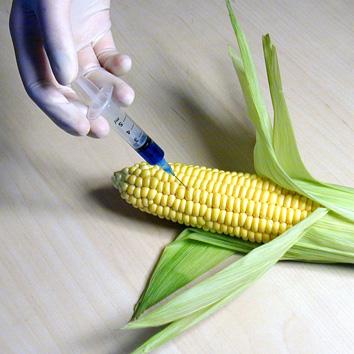
Even if you are a fan of eating products that contain high fructose corn syrup, I think it’s still wise to know the source of what you are putting into your mouth. Anything derived from corn (and soy) carries the potential to be genetically modified (GMO) so it can withstand a few solid drenchings of pesticides and herbicides, including Monsanto’s Roundup. The corn can also be modified by changing its DNA so that it “naturally” wards off bugs and increase crop yields.
Currently in the United States, the FDA has not required genetically engineered products to be labeled as such, while many other countries have demanded the labeling, including the European Union. A number of people work in the government, including the FDA, who stand to gain through their association with corporations like Monsanto, thus the labeling law has gotten bogged down in red tape.
Labeling all products with GMO ingredients is a vitally important issue that we as consumers must insist upon. The FDA hasn’t required labeling, indicating it’s too complicated. They say the evidence against GMO food isn’t clear enough, they don’t want consumers like me and you to look down on GMO ingredients in our food, and, what they don’t say, is that there are powerful people with corporate interests whose personal wealth will be negatively affected when we stop spending our money on their products.
We do know that there are adverse health effects from this form of biotechnology, that it was not and hasn’t been studied properly before it was used in the food supply, and that the use of GMO seed in crops contaminates other fields, including those that are organic. We also know that in many cases, more pesticides and herbicides have to be used on these crops. If you would like to learn more about this, read Dr. Joseph Mercola’s article entitled “10 Reasons to Avoid Genetically Modified Foods” at http://articles.mercola.com/sites/articles/archive/2010/02/27/10-reasons-why-no-one-needs-gm-foods.aspx. At the end of this article are numerous references for those of you interested in further research.
Whenever I write about these concerns, and when colleagues have done the same, someone (often working in Washington, DC) responds with a scathing letter, an attempt not to state facts, but rather disqualify the author and further confuse the public. The responses are personal attacks instead of rational disputes. This is spin, and it’s done because big money is involved, they know the facts are building against them, and they’re afraid the American public won’t remain in the dark for long.
But the American consumer is king and all we need is knowledge. We are the ones with the money who buy the products, and there is power in that. We could change the system at any time, with the dollar. By buying whole organic food, preferably from local farmers, and shunning the processed food world or at least demanding proper labeling, each of us declares that we support foods (including corn) to be grown the way nature intended, not modified by scientists, however well-meaning they might be. Keep in mind, all non-organic foods you pay for that contain corn (and soy) derivatives are likely to in some way support the GMO practice, while allowing chemical companies like Monsanto to control our food supply. This includes conventionally grown beef and chicken, since they are subjected to the GMO food in their daily feed.
October 2010 will be the first official “Non-GMO month” involving more than 580 natural food stores nationwide. This will be to promote awareness and celebrate your right to choose food that is not genetically modified. You can learn more about the event by reading a press release from the executive director of the Non-GMO Project: http://www.nongmoproject.org/wp-content/uploads/2010/07/Non-GMO-Month-Press-Release.pdf.
If you want to watch two good movies, see The Future of Food and Food, Inc. They help clarify these issues, and at the very least, make us more aware of the necessity to have a GMO labeling law. This law might be complicated to enforce, but no more so than the prospect of an entire food supply being contaminated.
If you’re interest is piqued, read Jeffrey Smith’s book Seeds of Deception. For more on the American food industry read Marion Nestle’s Food Politics and Eric Schlosser’s Fast Food Nation.
A descendant of Midwest farmers who came to California to work in the fertile Central Valley, I’ll continue to be an advocate for organic farmers and local farmers’ markets. I hope you will do the same, or we run the very real risk of being fed solely by a chemical giant who doesn’t have our best interests at heart.
I can detect high fructose corn syrup in any product. It cheapens the taste and has a sickly sweet flavor. “Corn sugar” will do the same. It isn’t like regular sugar and doesn’t taste like it even though the argument laid out by the Corn Refiners Association is that high fructose corn syrup has the same nutritional value as sugar. Well, for Pete’s sake, who eats sugar for its nutritional value, which is nil? Let’s not forget the real issue is that we, as a nation, consume too much sugar in any form.
Even if you are a fan of eating products that contain high fructose corn syrup, I think it’s still wise to know the source of what you are putting into your mouth. Anything derived from corn (and soy) carries the potential to be genetically modified (GMO) so it can withstand a few solid drenchings of pesticides and herbicides, including Monsanto’s Roundup. The corn can also be modified by changing its DNA so that it “naturally” wards off bugs and increase crop yields.
Currently in the United States, the FDA has not required genetically engineered products to be labeled as such, while many other countries have demanded the labeling, including the European Union. A number of people work in the government, including the FDA, who stand to gain through their association with corporations like Monsanto, thus the labeling law has gotten bogged down in red tape.
Labeling all products with GMO ingredients is a vitally important issue that we as consumers must insist upon. The FDA hasn’t required labeling, indicating it’s too complicated. They say the evidence against GMO food isn’t clear enough, they don’t want consumers like me and you to look down on GMO ingredients in our food, and, what they don’t say, is that there are powerful people with corporate interests whose personal wealth will be negatively affected when we stop spending our money on their products.
We do know that there are adverse health effects from this form of biotechnology, that it was not and hasn’t been studied properly before it was used in the food supply, and that the use of GMO seed in crops contaminates other fields, including those that are organic. We also know that in many cases, more pesticides and herbicides have to be used on these crops. If you would like to learn more about this, read Dr. Joseph Mercola’s article entitled “10 Reasons to Avoid Genetically Modified Foods” at http://articles.mercola.com/sites/articles/archive/2010/02/27/10-reasons-why-no-one-needs-gm-foods.aspx. At the end of this article are numerous references for those of you interested in further research.
Whenever I write about these concerns, and when colleagues have done the same, someone (often working in Washington, DC) responds with a scathing letter, an attempt not to state facts, but rather disqualify the author and further confuse the public. The responses are personal attacks instead of rational disputes. This is spin, and it’s done because big money is involved, they know the facts are building against them, and they’re afraid the American public won’t remain in the dark for long.
But the American consumer is king and all we need is knowledge. We are the ones with the money who buy the products, and there is power in that. We could change the system at any time, with the dollar. By buying whole organic food, preferably from local farmers, and shunning the processed food world or at least demanding proper labeling, each of us declares that we support foods (including corn) to be grown the way nature intended, not modified by scientists, however well-meaning they might be. Keep in mind, all non-organic foods you pay for that contain corn (and soy) derivatives are likely to in some way support the GMO practice, while allowing chemical companies like Monsanto to control our food supply. This includes conventionally grown beef and chicken, since they are subjected to the GMO food in their daily feed.
October 2010 will be the first official “Non-GMO month” involving more than 580 natural food stores nationwide. This will be to promote awareness and celebrate your right to choose food that is not genetically modified. You can learn more about the event by reading a press release from the executive director of the Non-GMO Project: http://www.nongmoproject.org/wp-content/uploads/2010/07/Non-GMO-Month-Press-Release.pdf.
If you want to watch two good movies, see The Future of Food and Food, Inc. They help clarify these issues, and at the very least, make us more aware of the necessity to have a GMO labeling law. This law might be complicated to enforce, but no more so than the prospect of an entire food supply being contaminated.
If you’re interest is piqued, read Jeffrey Smith’s book Seeds of Deception. For more on the American food industry read Marion Nestle’s Food Politics and Eric Schlosser’s Fast Food Nation.
A descendant of Midwest farmers who came to California to work in the fertile Central Valley, I’ll continue to be an advocate for organic farmers and local farmers’ markets. I hope you will do the same, or we run the very real risk of being fed solely by a chemical giant who doesn’t have our best interests at heart.
September 16, 2010
Turn Your Cast-Off Food Into Gold by Composting

There is little to no actual trash in my garbage bin. I recycle any paper products or glass, and all vegetable, fruit and table scraps go into the compost bucket under my kitchen sink. Once full, I take the bucket out to the far corner of the yard where I dump it into a big pile. I toss in a few leaves, and the pile turns itself into the most amazing, dark, rich soil I've ever seen.
I was quite truly astonished when I first witnessed food and leaves turn into healthy soil. I had no idea of the method by which nature quickly breaks down organic matter, turning it into a lush product. Those of you who garden will understand my use of "lush" when referring to soil. Those of you who don't tend to the earth and grow a few things, you must start, even if it's a small pot of something near a window.
The soil you create yourself can be used as mulch around trees and bushes. It can go into flower pots and, of course, can be mixed into soil in your garden. It enriches and feeds the earth while repelling the bugs that destroy your beloved plants.
Yes, strong, healthy soil makes the use of caustic pesticides, herbicides and fungicides on our precious earth all the more ridiculous, since these chemicals deplete the soil. This weakens the plants, strips them of nutrients and brings on even more pests.
Composting is an amazing, wonderful way to help heal this precious earth. It is one way to give back to this planet which has provided us with all we need. And once you start, you won't want to see another banana peel or broccoli stalk go into the trash because you'll know what it's capable of becoming.
My friend Rosanne (an earthy Taurus, naturally) taught me how to make a compost pile. I was finding it all mysterious and complicated, but she changed this. Her method?
Use a bucket under the sink for your kitchen scraps. Outside, dig a hole about two feet deep and two to three feet wide. Put your cast-off food scraps in it with some leaves. Cover these with some dirt. Every few days, turn the pile a bit with a shovel or pitchfork to aerate it. If it's dry, add some water so it becomes like a wrung out sponge.
Keep adding to the pile. When it’s fairly large, dig another hole next to it and begin adding fresh scraps to this new pile, allowing the older one to cook and do its thing.
Out of the few methods I've tried, Rosanne's is the best and easiest. I've heard people say you have to do it in layers, adding food, then leaves, then dirt and so on. But that's too complicated. All you need do is toss your scraps in and cover them with dirt. Add a few leaves and cuttings from plants or grass, mix once in awhile and add some water occasionally. In very cold climates, you'll need alternatives. In this case, check with your local waste management company to see if they offer compost bins.
For the past couple of years, I have used a black compost bin instead of making my pile on the ground. This has served to keep Rami, my Labrador-German Shepherd foodie, from eating everything in the pile. But it doesn't work as well for composting. It's not as fast or efficient. My next step will be to put a little enclosure around the pile, so it keeps the critters out.
If you live in an apartment or a place where an outdoor pile isn't possible, there are now counter top compost makers. To find out more about them, you can do an internet search of counter top composters. You’ll see there are many styles and a wide price range to choose from.
Even if you aren't a gardener or don’t have a green thumb, just spreading your homemade compost onto the earth - perhaps around a few trees in your neighborhood - will help repair this place we have for so long treated with disregard.
September 9, 2010
Mercury Retrogrades while Mars and Venus Dance
Appearing to go backward in the sky, Mercury is now on its retrograde path until the 12th of September. Most of you will remember that I encourage you to take a rest during Mercury retrograde. It is a time when the mind wants to meditate, renew, relax, refresh, recuperate, rejuvenate.
The mind of everyone is ruled by Mercury, thus everyone's mind is affected by the energy of its apparent backward motion. Continuing on the same forward push as usual during this time period will often result in frustration and delays.
And what about those of us born with Mercury retro? This group thinks a little differently, sees things from a different perspective, the mind not working in the usual manner. Things are learned and communicated in ways not always understood by the larger group. What if school teachers and parents knew these things about their children? Do you know where your own Mercury is in your chart? It reveals a lot about your learning and communication style.
I like to check where Mercury is retrograde in the birth chart to see what area of your life is under review. I know many of you have seen my blog post from last year on Mercury retrograde, but if you are new to my muse-letter, you can read it here: http://christinagrant.blogspot.com/2009/12/mercury-retrograde-december-26-january.html
In a not-so-common occurrence, Mars and Venus have been paired together in the sky, moving in tandem, at times being seen plainly by the naked eye.
I believe they came together at the perfect moment this summer, as feminine and masculine energies strive to become balanced within ourselves and on the planet.
Venus moved into Scorpio yesterday morning, and Mars follows her next week. Perhaps it is only right that this goddess lead the way into Scorpio's dark underworld.
And of significance as well, Venus will turn retrograde in Scorpio on October 8th. Wherever this occurs in your chart will indicate a place of review, perhaps something new coming in. You'll find another piece to a puzzle you've worked on during your lifetime going back in 8 year blocks.
Until November 18th, Venus will ask you to look more closely at yourself, how you associate with others in relationship to your own values. The theme of this last came up in 2002, 1994, 1986, 1978...
The mind of everyone is ruled by Mercury, thus everyone's mind is affected by the energy of its apparent backward motion. Continuing on the same forward push as usual during this time period will often result in frustration and delays.
And what about those of us born with Mercury retro? This group thinks a little differently, sees things from a different perspective, the mind not working in the usual manner. Things are learned and communicated in ways not always understood by the larger group. What if school teachers and parents knew these things about their children? Do you know where your own Mercury is in your chart? It reveals a lot about your learning and communication style.
I like to check where Mercury is retrograde in the birth chart to see what area of your life is under review. I know many of you have seen my blog post from last year on Mercury retrograde, but if you are new to my muse-letter, you can read it here: http://christinagrant.blogspot.com/2009/12/mercury-retrograde-december-26-january.html
In a not-so-common occurrence, Mars and Venus have been paired together in the sky, moving in tandem, at times being seen plainly by the naked eye.
I believe they came together at the perfect moment this summer, as feminine and masculine energies strive to become balanced within ourselves and on the planet.
Venus moved into Scorpio yesterday morning, and Mars follows her next week. Perhaps it is only right that this goddess lead the way into Scorpio's dark underworld.
And of significance as well, Venus will turn retrograde in Scorpio on October 8th. Wherever this occurs in your chart will indicate a place of review, perhaps something new coming in. You'll find another piece to a puzzle you've worked on during your lifetime going back in 8 year blocks.
Until November 18th, Venus will ask you to look more closely at yourself, how you associate with others in relationship to your own values. The theme of this last came up in 2002, 1994, 1986, 1978...
September New Moon in Virgo
We are still in the energy of the dark moon, which was perfectly dark in Virgo yesterday morning, Wednesday, September 8th.
If we notice our own internal rhythm, we might notice ourselves feeling more inward and quiet when the moon is dark. It isn't a time to push full speed ahead, especially with Mercury retrograde right now. This is a time to be introspective.
It is also the ideal time to put your manifestation list together, to write down what you want so it can more easily come to you. Each new moon is an opportunity to focus your thoughts on what you'd like to see more of in your life. It is a time of renewal, of new beginnings.
Write these down: how do you want to feel in relationships? How do you want to feel each morning when you wake up and think about the day ahead? What is the feeling you most want to embrace in your life? How do you want to feel about yourself and your role in this world? This new moon is a time to align with more of what feeds your soul.
Once you have your list written (alternatively, you can draw or paint it) do whatever you want with it, but do not fret over it. Release it, knowing you are now in closer alignment with how you want to feel each day, and that this will increase as the moon grows brighter.
If we notice our own internal rhythm, we might notice ourselves feeling more inward and quiet when the moon is dark. It isn't a time to push full speed ahead, especially with Mercury retrograde right now. This is a time to be introspective.
It is also the ideal time to put your manifestation list together, to write down what you want so it can more easily come to you. Each new moon is an opportunity to focus your thoughts on what you'd like to see more of in your life. It is a time of renewal, of new beginnings.
Write these down: how do you want to feel in relationships? How do you want to feel each morning when you wake up and think about the day ahead? What is the feeling you most want to embrace in your life? How do you want to feel about yourself and your role in this world? This new moon is a time to align with more of what feeds your soul.
Once you have your list written (alternatively, you can draw or paint it) do whatever you want with it, but do not fret over it. Release it, knowing you are now in closer alignment with how you want to feel each day, and that this will increase as the moon grows brighter.
Subscribe to:
Posts (Atom)