Most commercial cleaning products, cosmetics, and scented items (including perfumes) are sickening. They poison people daily.
These toxins are on floors, walls, countertops, beds, furniture, towels, clothing, and are applied directly to the skin. What happens in your body when they enter your bloodstream? Do they accumulate or combine together to become more potent? Do they cause rashes, allergies, respiratory problems, headaches, liver, kidney, and brain damage while assisting mutant cells in their quest to multiply? In many cases, yes they do. This is why we must think for ourselves when it comes to using these products.
The other day I saw a television commercial showing an attractive woman spraying an “air freshener” around her living room and on her sofa. Later, I saw another advertisement for a so-called air freshener that releases a mist when someone walks by. Since perfume, cosmetics, and scented items are heavily advertised by beautiful people on television and in print, their use seems perfectly normal, however, it is far from desirable.
A well-scented, squeaky-clean home and body is lovely. But to obtain both from harsh chemicals is damaging to humans and animals, not to mention expensive. The majority of products cause toxic indoor air quality that is worse than outdoor air pollution. Commercial air “fresheners” themselves contain volatile organic compounds (VOCs), many of which have been proven to cause cancer. You might as well spray acetone, isobutene, propane, petroleum distillates, toluene, tar, lead, arsenic, radon, and even ozone into your breathing space.
Many years ago I took a day and did a massive review of products in my house. I threw out trash cans full of toxic junk, much of it expensive department store cosmetics and perfumes along with far too many cleaning supplies. I also tossed scented candles and all those lovely smell-good bath and body products.
I began to search for organic, toxin-free replacements. There were virtually none in large department stores, boutiques, drug or grocery stores, which themselves smell of a harsh mix of chemicals from the goods they sell.
I learned to live with very few products. Shopping is simple, I’ve saved thousands of dollars and have taken a toxic load off my body. My number one household cleaning product? A large, inexpensive bottle of white vinegar which I mix with water and use for general cleaning.
As for air fresheners, if you can’t simply open windows and let fresh air inside then use an air purifier. If you want a great scent on yourself or in your house, use 100% pure essential oils that come from plants, trees, or flowers. You can also use an essential oil diffuser or mix a few drops of essential oils into a spray bottle filled with distilled water. Bring in green plants which naturally purify the air.
With the New Year here, it’s the perfect time to address your indoor air quality. How about making 2011 the year you become nontoxic? When you want to know about ingredients in any household product, see the Household Products Database maintained by the National Institutes of Health: www.HouseholdProducts.nlm.nih.gov or get the Material Safety Data Sheet (MSDS) from the manufacturer’s website and look at the list of hazardous ingredients.
Learn more by reading How Everyday Products Make People Sick: Toxins at Home and in the Workplace by Paul D. Blanc. Note that many products labeled “all natural” and “organic” are just as toxic as the conventional ones. To learn more about natural cleaning solutions, including alternatives to bleach, read Organic Housekeeping by Ellen Sandbeck.
Showing posts with label toxins. Show all posts
January 10, 2011
Clean Up Toxic Indoor Air
Labels:
headaches,
lifestyle,
toxins,
women's health
November 13, 2010
Zero VOC, Non Toxic, Healthier Painting
For several years my home office has been the color of sea foam green. This particular room is always cold, even in summer, and needs an extra heater to bring it to a comfortable temperature.
A few weeks ago as the weather began to turn chilly, in a moment of do-it-yourself enthusiasm I decided I was done with the sea foam green, a shade that can in fact make the room feel colder than it is. I wanted a color that would make the room warmer.
Have you tried to decide on a paint color lately? It’s daunting. Standing in the middle of an enormous home improvement warehouse, I actually began to consult the names of the colors, as a way to help me decide. Who has the job of thinking up these names? I selected “Moroccan Sky,” an earth tone resembling terra cotta. Perfect.
I wanted my Moroccan Sky to be zero-VOC to limit my toxic exposure. VOCs are Volatile Organic Compounds found in a variety of products such as furniture, carpeting, adhesives, and paints. The compounds release into the air and can cause ailments from allergies to cancer to ozone layer depletion.
Nowadays you can take in a swatch of color that can be matched in almost any brand of paint. But getting my exotically named orange-brown paint without VOCs apparently meant complications for the paint department employee, who seemed more interested in stocking shelves than mixing paint. So he said, “It’s a lot more expensive and really doesn’t matter. Today’s paints are all very low in VOCs. It’s not like the old days. These are all incredibly low, so just get what you want in any brand and you’ll be fine.”
I doubted this, truly, but I was on a DIY enthusiasm roll which doesn’t come around often. I went ahead with Moroccan Sky and its “low” VOCs. Once back home in full paint mode, it was clear there were plenty of toxins coming out of the can, into the air, and onto my wall. The smell was so strong I took frequent breaks even though a good breeze blew through the windows. I began to wonder about cancer. I painted one wall, got out quickly, and let the room air out overnight with an air filter running on turbo.
The next day I went to my small local hardware store and inquired about a paint color that is a few notches down the scale. It was a bit too ambitious after all, to have four “Moroccan” walls. I wanted warmth, not a cave. This paint department employee was very agreeable that zero-VOC, non-toxic paint is the way to go. He gave me literature supporting the reasons why it’s better for our health, which I knew but had lost sight of in my eagerness to get started. I settled on “Spiced Cider” and even the employee said it sounded wonderful.
Let me spare you the further details of my painting adventures and get to the point, which is to say, if you are up for a change and would like to paint your home or office, spend the extra $10 per gallon to get paint that is safe for you, your pets, and the environment. Here are more reasons why:
• There are little or no noxious fumes.
• There isn’t toxic off gassing, which can occur for years with ordinary paint.
• You can use the room right away without having to wait for the smell to dissipate.
• You’ll be exposed to zero carcinogens. Be sure to verify this in the brand you purchase.
• There will be no risk of toxicity to your kidneys, liver, and nervous system.
• You’ll avoid sinus inflammation and allergies.
• You won’t harm the ozone layer.
• A zero-VOC, non-toxic paint won’t add more caustic chemicals to landfills.
• You’ll protect your pets from breathing toxic indoor air, which in many cases is much more polluted than outdoor air. Ordinary paint fumes can kill birds, and you'll not have to worry about this at all.
Once I brought home my new gallon of Spiced Cider, I opened the lid and swiped a bit of it on the walls. Breathing easy, it felt like the best extra $10 ever spent.
A few weeks ago as the weather began to turn chilly, in a moment of do-it-yourself enthusiasm I decided I was done with the sea foam green, a shade that can in fact make the room feel colder than it is. I wanted a color that would make the room warmer.
Have you tried to decide on a paint color lately? It’s daunting. Standing in the middle of an enormous home improvement warehouse, I actually began to consult the names of the colors, as a way to help me decide. Who has the job of thinking up these names? I selected “Moroccan Sky,” an earth tone resembling terra cotta. Perfect.
I wanted my Moroccan Sky to be zero-VOC to limit my toxic exposure. VOCs are Volatile Organic Compounds found in a variety of products such as furniture, carpeting, adhesives, and paints. The compounds release into the air and can cause ailments from allergies to cancer to ozone layer depletion.
Nowadays you can take in a swatch of color that can be matched in almost any brand of paint. But getting my exotically named orange-brown paint without VOCs apparently meant complications for the paint department employee, who seemed more interested in stocking shelves than mixing paint. So he said, “It’s a lot more expensive and really doesn’t matter. Today’s paints are all very low in VOCs. It’s not like the old days. These are all incredibly low, so just get what you want in any brand and you’ll be fine.”
I doubted this, truly, but I was on a DIY enthusiasm roll which doesn’t come around often. I went ahead with Moroccan Sky and its “low” VOCs. Once back home in full paint mode, it was clear there were plenty of toxins coming out of the can, into the air, and onto my wall. The smell was so strong I took frequent breaks even though a good breeze blew through the windows. I began to wonder about cancer. I painted one wall, got out quickly, and let the room air out overnight with an air filter running on turbo.
The next day I went to my small local hardware store and inquired about a paint color that is a few notches down the scale. It was a bit too ambitious after all, to have four “Moroccan” walls. I wanted warmth, not a cave. This paint department employee was very agreeable that zero-VOC, non-toxic paint is the way to go. He gave me literature supporting the reasons why it’s better for our health, which I knew but had lost sight of in my eagerness to get started. I settled on “Spiced Cider” and even the employee said it sounded wonderful.
Let me spare you the further details of my painting adventures and get to the point, which is to say, if you are up for a change and would like to paint your home or office, spend the extra $10 per gallon to get paint that is safe for you, your pets, and the environment. Here are more reasons why:
• There are little or no noxious fumes.
• There isn’t toxic off gassing, which can occur for years with ordinary paint.
• You can use the room right away without having to wait for the smell to dissipate.
• You’ll be exposed to zero carcinogens. Be sure to verify this in the brand you purchase.
• There will be no risk of toxicity to your kidneys, liver, and nervous system.
• You’ll avoid sinus inflammation and allergies.
• You won’t harm the ozone layer.
• A zero-VOC, non-toxic paint won’t add more caustic chemicals to landfills.
• You’ll protect your pets from breathing toxic indoor air, which in many cases is much more polluted than outdoor air. Ordinary paint fumes can kill birds, and you'll not have to worry about this at all.
Once I brought home my new gallon of Spiced Cider, I opened the lid and swiped a bit of it on the walls. Breathing easy, it felt like the best extra $10 ever spent.
Labels:
lifestyle,
pet health and wellbeing,
toxins,
women's health
September 29, 2010
From Guinea Pigs to Power: No to GMO Foods and Manipulation
In my tiny area of the globe, I am a gardener, keeper of animals, feeder of birds - someone who is concerned about the protection of the earth, land, soil, waterways, air, and all living beings. Increasingly, I am aware of the myriad ways we have become detached from nature, and the natural ways of living on the planet. One of the main issues of concern is our lack of knowledge about where our food comes from.
Two weeks ago, the Corn Refiners Association applied to the FDA to change the name of high fructose corn syrup to “corn sugar.” Apparently, more and more consumers have been reading labels and they don’t want the syrupy stuff in their food. Now, an attempt to put another blindfold over the eyes of the American public has been made, to lead us to believe that their product, implicated in the nation’s obesity epidemic, is nothing more than sugar from corn.
I can detect high fructose corn syrup in any product. It cheapens the taste and has a sickly sweet flavor. “Corn sugar” will do the same. It isn’t like regular sugar and doesn’t taste like it even though the argument laid out by the Corn Refiners Association is that high fructose corn syrup has the same nutritional value as sugar. Well, for Pete’s sake, who eats sugar for its nutritional value, which is nil? Let’s not forget the real issue is that we, as a nation, consume too much sugar in any form.
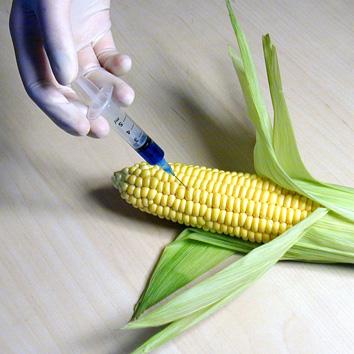
Even if you are a fan of eating products that contain high fructose corn syrup, I think it’s still wise to know the source of what you are putting into your mouth. Anything derived from corn (and soy) carries the potential to be genetically modified (GMO) so it can withstand a few solid drenchings of pesticides and herbicides, including Monsanto’s Roundup. The corn can also be modified by changing its DNA so that it “naturally” wards off bugs and increase crop yields.
Currently in the United States, the FDA has not required genetically engineered products to be labeled as such, while many other countries have demanded the labeling, including the European Union. A number of people work in the government, including the FDA, who stand to gain through their association with corporations like Monsanto, thus the labeling law has gotten bogged down in red tape.
Labeling all products with GMO ingredients is a vitally important issue that we as consumers must insist upon. The FDA hasn’t required labeling, indicating it’s too complicated. They say the evidence against GMO food isn’t clear enough, they don’t want consumers like me and you to look down on GMO ingredients in our food, and, what they don’t say, is that there are powerful people with corporate interests whose personal wealth will be negatively affected when we stop spending our money on their products.
We do know that there are adverse health effects from this form of biotechnology, that it was not and hasn’t been studied properly before it was used in the food supply, and that the use of GMO seed in crops contaminates other fields, including those that are organic. We also know that in many cases, more pesticides and herbicides have to be used on these crops. If you would like to learn more about this, read Dr. Joseph Mercola’s article entitled “10 Reasons to Avoid Genetically Modified Foods” at http://articles.mercola.com/sites/articles/archive/2010/02/27/10-reasons-why-no-one-needs-gm-foods.aspx. At the end of this article are numerous references for those of you interested in further research.
Whenever I write about these concerns, and when colleagues have done the same, someone (often working in Washington, DC) responds with a scathing letter, an attempt not to state facts, but rather disqualify the author and further confuse the public. The responses are personal attacks instead of rational disputes. This is spin, and it’s done because big money is involved, they know the facts are building against them, and they’re afraid the American public won’t remain in the dark for long.
But the American consumer is king and all we need is knowledge. We are the ones with the money who buy the products, and there is power in that. We could change the system at any time, with the dollar. By buying whole organic food, preferably from local farmers, and shunning the processed food world or at least demanding proper labeling, each of us declares that we support foods (including corn) to be grown the way nature intended, not modified by scientists, however well-meaning they might be. Keep in mind, all non-organic foods you pay for that contain corn (and soy) derivatives are likely to in some way support the GMO practice, while allowing chemical companies like Monsanto to control our food supply. This includes conventionally grown beef and chicken, since they are subjected to the GMO food in their daily feed.
October 2010 will be the first official “Non-GMO month” involving more than 580 natural food stores nationwide. This will be to promote awareness and celebrate your right to choose food that is not genetically modified. You can learn more about the event by reading a press release from the executive director of the Non-GMO Project: http://www.nongmoproject.org/wp-content/uploads/2010/07/Non-GMO-Month-Press-Release.pdf.
If you want to watch two good movies, see The Future of Food and Food, Inc. They help clarify these issues, and at the very least, make us more aware of the necessity to have a GMO labeling law. This law might be complicated to enforce, but no more so than the prospect of an entire food supply being contaminated.
If you’re interest is piqued, read Jeffrey Smith’s book Seeds of Deception. For more on the American food industry read Marion Nestle’s Food Politics and Eric Schlosser’s Fast Food Nation.
A descendant of Midwest farmers who came to California to work in the fertile Central Valley, I’ll continue to be an advocate for organic farmers and local farmers’ markets. I hope you will do the same, or we run the very real risk of being fed solely by a chemical giant who doesn’t have our best interests at heart.
Two weeks ago, the Corn Refiners Association applied to the FDA to change the name of high fructose corn syrup to “corn sugar.” Apparently, more and more consumers have been reading labels and they don’t want the syrupy stuff in their food. Now, an attempt to put another blindfold over the eyes of the American public has been made, to lead us to believe that their product, implicated in the nation’s obesity epidemic, is nothing more than sugar from corn.
I can detect high fructose corn syrup in any product. It cheapens the taste and has a sickly sweet flavor. “Corn sugar” will do the same. It isn’t like regular sugar and doesn’t taste like it even though the argument laid out by the Corn Refiners Association is that high fructose corn syrup has the same nutritional value as sugar. Well, for Pete’s sake, who eats sugar for its nutritional value, which is nil? Let’s not forget the real issue is that we, as a nation, consume too much sugar in any form.
Even if you are a fan of eating products that contain high fructose corn syrup, I think it’s still wise to know the source of what you are putting into your mouth. Anything derived from corn (and soy) carries the potential to be genetically modified (GMO) so it can withstand a few solid drenchings of pesticides and herbicides, including Monsanto’s Roundup. The corn can also be modified by changing its DNA so that it “naturally” wards off bugs and increase crop yields.
Currently in the United States, the FDA has not required genetically engineered products to be labeled as such, while many other countries have demanded the labeling, including the European Union. A number of people work in the government, including the FDA, who stand to gain through their association with corporations like Monsanto, thus the labeling law has gotten bogged down in red tape.
Labeling all products with GMO ingredients is a vitally important issue that we as consumers must insist upon. The FDA hasn’t required labeling, indicating it’s too complicated. They say the evidence against GMO food isn’t clear enough, they don’t want consumers like me and you to look down on GMO ingredients in our food, and, what they don’t say, is that there are powerful people with corporate interests whose personal wealth will be negatively affected when we stop spending our money on their products.
We do know that there are adverse health effects from this form of biotechnology, that it was not and hasn’t been studied properly before it was used in the food supply, and that the use of GMO seed in crops contaminates other fields, including those that are organic. We also know that in many cases, more pesticides and herbicides have to be used on these crops. If you would like to learn more about this, read Dr. Joseph Mercola’s article entitled “10 Reasons to Avoid Genetically Modified Foods” at http://articles.mercola.com/sites/articles/archive/2010/02/27/10-reasons-why-no-one-needs-gm-foods.aspx. At the end of this article are numerous references for those of you interested in further research.
Whenever I write about these concerns, and when colleagues have done the same, someone (often working in Washington, DC) responds with a scathing letter, an attempt not to state facts, but rather disqualify the author and further confuse the public. The responses are personal attacks instead of rational disputes. This is spin, and it’s done because big money is involved, they know the facts are building against them, and they’re afraid the American public won’t remain in the dark for long.
But the American consumer is king and all we need is knowledge. We are the ones with the money who buy the products, and there is power in that. We could change the system at any time, with the dollar. By buying whole organic food, preferably from local farmers, and shunning the processed food world or at least demanding proper labeling, each of us declares that we support foods (including corn) to be grown the way nature intended, not modified by scientists, however well-meaning they might be. Keep in mind, all non-organic foods you pay for that contain corn (and soy) derivatives are likely to in some way support the GMO practice, while allowing chemical companies like Monsanto to control our food supply. This includes conventionally grown beef and chicken, since they are subjected to the GMO food in their daily feed.
October 2010 will be the first official “Non-GMO month” involving more than 580 natural food stores nationwide. This will be to promote awareness and celebrate your right to choose food that is not genetically modified. You can learn more about the event by reading a press release from the executive director of the Non-GMO Project: http://www.nongmoproject.org/wp-content/uploads/2010/07/Non-GMO-Month-Press-Release.pdf.
If you want to watch two good movies, see The Future of Food and Food, Inc. They help clarify these issues, and at the very least, make us more aware of the necessity to have a GMO labeling law. This law might be complicated to enforce, but no more so than the prospect of an entire food supply being contaminated.
If you’re interest is piqued, read Jeffrey Smith’s book Seeds of Deception. For more on the American food industry read Marion Nestle’s Food Politics and Eric Schlosser’s Fast Food Nation.
A descendant of Midwest farmers who came to California to work in the fertile Central Valley, I’ll continue to be an advocate for organic farmers and local farmers’ markets. I hope you will do the same, or we run the very real risk of being fed solely by a chemical giant who doesn’t have our best interests at heart.
August 20, 2010
The Dilemma with Drinking Water
The Environmental Protection Agency warned that drinking water pollution is one of the top environmental threats to our health. Contaminants are routinely measured in municipal drinking water including lead, cadmium, mercury, metals, pesticides, fertilizers, and chlorine. These can enter your body not only by drinking the water, but through bathing in it.
Our blood is 90% water and our muscle tissue is 75% water. We need to drink clean water to deliver nutrients and oxygen, discharge metabolic wastes, and clear out toxins. Our ultimate goal is to relieve the body from daily environmental stressors, but what do we do when one of these stressors is our own water? Although water from our faucets and city water supplies is ordinarily safe from bacteria and harmful organisms, undesirable contaminants in the water are an ongoing concern.
One of these contaminants is fluoride. As an additive to public water supplies, fluoride has been banned as unsafe for public health in many countries, yet it is added to many municipal water supplies in the United States with assurances that it is a “proven health measure.” Michael Barbee, author of Politically Incorrect Nutrition says, “Fluoride improperly mineralizes many tissues, including bones, joints, and teeth. It also disarms the immune system and calcifies the pineal gland.”
Despite the urgings of dentists, fluoride may not be necessary to protect teeth. Tooth decay appears to result from a poor diet and lack of basic hygiene. You can read more about this theory at http://www.westonaprice.org/notes-from-yesteryear/186-price-and-fluoride.html. And if you’re interested in how fluoride became so widespread, read The Fluoride Deception, written by Christopher Bryson, which details how public opinion has been molded to believe fluoridation is a good thing. See a review of Bryson’s book at http://www.westonaprice.org/book-reviews/thumbs-up/380-fluoride-deception.html.
Fluoride and other contaminants aside, we still must find a way to have healthy drinking water. Coffee, sodas, and other commercial drinks don’t adequately hydrate the body like pure water does. Lack of water in the body weakens immunity and increases susceptibility to disease because water actually protects cells from diseases and viruses. When your cells lack water, it is easier for foreign invaders to enter them. Adequate water holds the cells in a structure that allows for optimal functioning.
In regard to healthy water, Mu Shik Jhon, Ph.D., author of The Water Puzzle and The Hexagonal Key tells us, “What was once only theory is being confirmed. Water has a specific structure which varies with environmental conditions.” He tells us that water around cancer cells is less structured than water around normal cells. His research has shown that cancer has a common feature: the destruction of the water structure at a cellular level. Dr. Mu Shik Jhon says when hexagonal structure of water near cells is compromised, cells are more vulnerable to external stimuli. Cells surrounded by less structured water are weaker and more prone to malfunction and genetic mutation. “The failure to consider water’s impact during disease may be a glaring oversight,” he says, and goes on to say that water is especially critical for cancer patients, protecting cells from environmental damage. Through this research, some have suggested the possibility of returning cancer cells to a normal state by improving the water environment at a cellular level.
The road to good health involves being adequately hydrated with healthy water. Bottled water is not optimal unless you know the source is pure and it comes in glass, as plastic is an environmental pollutant that can leach toxic chemicals into your water.
What to do? Filter your own drinking, shower, and bath water with high quality filters. Look for filters for your drinking water that eliminate contaminants found in your municipal water. To learn more about the tap water in your community, see the Drinking Water website for the United States Environmental Protection Agency at http://water.epa.gov/drink/index.cfm.
Our blood is 90% water and our muscle tissue is 75% water. We need to drink clean water to deliver nutrients and oxygen, discharge metabolic wastes, and clear out toxins. Our ultimate goal is to relieve the body from daily environmental stressors, but what do we do when one of these stressors is our own water? Although water from our faucets and city water supplies is ordinarily safe from bacteria and harmful organisms, undesirable contaminants in the water are an ongoing concern.
One of these contaminants is fluoride. As an additive to public water supplies, fluoride has been banned as unsafe for public health in many countries, yet it is added to many municipal water supplies in the United States with assurances that it is a “proven health measure.” Michael Barbee, author of Politically Incorrect Nutrition says, “Fluoride improperly mineralizes many tissues, including bones, joints, and teeth. It also disarms the immune system and calcifies the pineal gland.”
Despite the urgings of dentists, fluoride may not be necessary to protect teeth. Tooth decay appears to result from a poor diet and lack of basic hygiene. You can read more about this theory at http://www.westonaprice.org/notes-from-yesteryear/186-price-and-fluoride.html. And if you’re interested in how fluoride became so widespread, read The Fluoride Deception, written by Christopher Bryson, which details how public opinion has been molded to believe fluoridation is a good thing. See a review of Bryson’s book at http://www.westonaprice.org/book-reviews/thumbs-up/380-fluoride-deception.html.
Fluoride and other contaminants aside, we still must find a way to have healthy drinking water. Coffee, sodas, and other commercial drinks don’t adequately hydrate the body like pure water does. Lack of water in the body weakens immunity and increases susceptibility to disease because water actually protects cells from diseases and viruses. When your cells lack water, it is easier for foreign invaders to enter them. Adequate water holds the cells in a structure that allows for optimal functioning.
In regard to healthy water, Mu Shik Jhon, Ph.D., author of The Water Puzzle and The Hexagonal Key tells us, “What was once only theory is being confirmed. Water has a specific structure which varies with environmental conditions.” He tells us that water around cancer cells is less structured than water around normal cells. His research has shown that cancer has a common feature: the destruction of the water structure at a cellular level. Dr. Mu Shik Jhon says when hexagonal structure of water near cells is compromised, cells are more vulnerable to external stimuli. Cells surrounded by less structured water are weaker and more prone to malfunction and genetic mutation. “The failure to consider water’s impact during disease may be a glaring oversight,” he says, and goes on to say that water is especially critical for cancer patients, protecting cells from environmental damage. Through this research, some have suggested the possibility of returning cancer cells to a normal state by improving the water environment at a cellular level.
The road to good health involves being adequately hydrated with healthy water. Bottled water is not optimal unless you know the source is pure and it comes in glass, as plastic is an environmental pollutant that can leach toxic chemicals into your water.
What to do? Filter your own drinking, shower, and bath water with high quality filters. Look for filters for your drinking water that eliminate contaminants found in your municipal water. To learn more about the tap water in your community, see the Drinking Water website for the United States Environmental Protection Agency at http://water.epa.gov/drink/index.cfm.
July 28, 2010
It's Time to Think for Ourselves About Artificial Sweeteners
I'm at the stage in my book where I talk about sugar and all its derivatives. I just have to put a bit about artificial sweeteners in my blog right now because it's so insidious and we are so misled. I don't think there is another section of my book where I get so riled up!
I continue to hear that the latest newfangled artificial sweetener in yellow packets is safe even though this is nonsense. “I talked with my pharmacist about it and he said it's fine,” one person said. Now Hear This… artificial sweeteners in any form, no matter how they are advertised to us, are not healthy alternatives. You can’t afford to be ignorant about what you put into your body, and your pharmacist is a legal drug dealer. Pharmacists, bless them, distribute synthetic drugs to a nation that is becoming sicker by the minute. They are not knowledgeable about holistic healing. Although I must say, European pharmacists, bless them too, have much awareness about herbs and natural remedies.
The truth about artificial sweeteners has been difficult to come by. We are told to stay away from sugar to avoid obesity and lose weight. But the nation turned to chemical substitutes and became fatter than ever. It’s not sugar that made Americans obese. We’ve had that all along. What we didn’t always have was processed foods, many of which contain artificial sweeteners that are suspected of causing cancer.
I offer you an overview in my book (I'm on the final edits!) of some of the most popular sweeteners because I believe it’s time we step into our own power, take our brains back from the all-pervasive advertisement culture we live in, and know what we are putting into our own bodies.
Here is some background on just one of the insidious little things: Aspartame.
Manufactured by Monsanto Chemical Corporation, the same company responsible for pesticides that kill not only pests in your yard, but the earth itself, you’ll recognize aspartame as "Nutrasweet" and "Equal."
Despite this common knowledge, I still find these poisons on restaurant tables everywhere.
Aspartame is a neurotoxin and excitotoxin sometimes seen on labels listed as “Phenylketonurics: Contains Phenylalanine.” It can be found in over-the-counter and prescription drugs often listed under “inactive ingredients.” It is also responsible for the majority of adverse reactions, such as headaches and allergies, reported to the United States Food and Drug Administration (FDA).
A common additive in processed food, aspartame breaks down into methanol that converts to formaldehyde. Formaldehyde has been shown to denature and mutate DNA. Classified as a human carcinogen by the International Agency for Research on Cancer, formaldehyde is deemed a probable cause of cancer by the United States Environmental Protection Agency. This information was put out by the National Cancer Institute on their formaldehyde fact sheet.
This is but one more reason to convert your diet to whole foods that are found in nature, and to eliminate processed, packaged products.
I continue to hear that the latest newfangled artificial sweetener in yellow packets is safe even though this is nonsense. “I talked with my pharmacist about it and he said it's fine,” one person said. Now Hear This… artificial sweeteners in any form, no matter how they are advertised to us, are not healthy alternatives. You can’t afford to be ignorant about what you put into your body, and your pharmacist is a legal drug dealer. Pharmacists, bless them, distribute synthetic drugs to a nation that is becoming sicker by the minute. They are not knowledgeable about holistic healing. Although I must say, European pharmacists, bless them too, have much awareness about herbs and natural remedies.
The truth about artificial sweeteners has been difficult to come by. We are told to stay away from sugar to avoid obesity and lose weight. But the nation turned to chemical substitutes and became fatter than ever. It’s not sugar that made Americans obese. We’ve had that all along. What we didn’t always have was processed foods, many of which contain artificial sweeteners that are suspected of causing cancer.
I offer you an overview in my book (I'm on the final edits!) of some of the most popular sweeteners because I believe it’s time we step into our own power, take our brains back from the all-pervasive advertisement culture we live in, and know what we are putting into our own bodies.
Here is some background on just one of the insidious little things: Aspartame.
Manufactured by Monsanto Chemical Corporation, the same company responsible for pesticides that kill not only pests in your yard, but the earth itself, you’ll recognize aspartame as "Nutrasweet" and "Equal."
Despite this common knowledge, I still find these poisons on restaurant tables everywhere.
Aspartame is a neurotoxin and excitotoxin sometimes seen on labels listed as “Phenylketonurics: Contains Phenylalanine.” It can be found in over-the-counter and prescription drugs often listed under “inactive ingredients.” It is also responsible for the majority of adverse reactions, such as headaches and allergies, reported to the United States Food and Drug Administration (FDA).
A common additive in processed food, aspartame breaks down into methanol that converts to formaldehyde. Formaldehyde has been shown to denature and mutate DNA. Classified as a human carcinogen by the International Agency for Research on Cancer, formaldehyde is deemed a probable cause of cancer by the United States Environmental Protection Agency. This information was put out by the National Cancer Institute on their formaldehyde fact sheet.
This is but one more reason to convert your diet to whole foods that are found in nature, and to eliminate processed, packaged products.
Labels:
breast health,
headaches,
health care,
holistic health,
toxins,
women's health
July 12, 2010
15 Simple Ways to Support Your Digestion for Better Health
I recently heard a famous doctor telling people that it is normal to have a bowel movement every couple of days. While this might be the norm in our society, it is definitely not normal. It's not healthy either. It's constipation.
A healthy digestive system is top priority for health, especially if you want to heal from or prevent life-threatening diseases. With good digestion, toxins are carried out of your body and the nutrients from food can nourish you.
To do this, your bowels need to move regularly. Twice per day is ideal, but for some people, even once per day is rare. If this is the case for you, food and toxins alike are staying in your body too long, where they can fester.
When your digestive system isn’t like clockwork, all of your organs work less effectively. Your body can’t absorb the nutrients it needs. Your body wants to eliminate what is not useful to its optimum functioning while utilizing each and every nutrient it can from your food. That is part of its job. But the modern lifestyle prevents it. The average diet leads to increased cases of cancer, heart disease, arthritis, diabetes, skin conditions, aches and pains, indigestion, acid reflux, autoimmune disorders, and more.
To be well, we need to eat well, and top quality food is not pre-packaged. It's not found in a box, can, wrapper, or drive-thru. It’s found in your own kitchen or one in which fresh, real, live food is valued. Processed food is heavy in additives, light in nutrients and quality. Some of it is just plain dead. Your body can’t use it for nourishment and has to use energy to get it out of you.
With a little discipline and patience, you can heal or considerably improve long-standing digestive problems which are at the root of poor health. Here are 15 inexpensive things you can do to get you well on your way to digestive bliss, no matter what your current state of health.
1. If constipation is the norm for you, drink a large glass of warm water with one teaspoon to one tablespoon of fiber first thing in the morning. Use a fiber supplement based on fruits and vegetables.
2. Drink purified water throughout the day.
3. Drink a teaspoon of apple cider vinegar in a little warm water before each meal, or add it to salad dressings or vegetables.
4. Avoid sugar, white flour products, excess meat, food with chemical additives, fast food, caffeine in any form, fried foods, oranges and their juice, alcohol, and foods that can upset your stomach, such as spicy ones. Once your digestion is healthy again, you can occasionally indulge.
5. Eat a fresh room-temperature salad every day. However, this is not a good idea if you tend toward diarrhea. In that case, steamed vegetables and broths will be better for you.
6. Each morning, drink a warm glass of water with the juice of ½ an organic lemon.
7. Eat a bit of sauerkraut with every meal to create healthy gut flora. Once your digestion is healthy again, eat it regularly. You can also do this by supplementing your diet with a high quality probiotic.
8. Eat room temperature or slightly warm food, and avoid cold foods and drinks. Cold products cause your stomach to work harder to digest your food.
9. Eat homemade broths and stocks made from meat, chicken, or fish to gain their healing properties. These have been used by traditional cultures for centuries. Gelatin - which occurs naturally from simmering bones and cartilage - is a powerful aid for digestion.
10. If constipated, snack on a few raw walnuts that have been soaked in water for several hours. Soaking nuts helps you digest them better.
11. Drink fennel, ginger, peppermint, or chamomile tea instead of coffee or sodas.
12. Do an intestinal cleanse, preferably guided by a natural health practitioner. Follow up with a cleanse every year in the springtime.
13. Get tested for parasites and Candida so you can begin to eliminate vitality-sapping parasites and fungus.
14. Supplement your diet with digestive enzymes which can assist your body detoxify and absorb nutrients. You can also eat more pineapple and papaya, both of which contain helpful digestive enzymes.
15. Sit down for meals. Eat slowly in a comforting environment with your attention on your meal, not on the computer or television, and especially not on the news. Rest for a moment after you eat.
A healthy digestive system is top priority for health, especially if you want to heal from or prevent life-threatening diseases. With good digestion, toxins are carried out of your body and the nutrients from food can nourish you.
To do this, your bowels need to move regularly. Twice per day is ideal, but for some people, even once per day is rare. If this is the case for you, food and toxins alike are staying in your body too long, where they can fester.
When your digestive system isn’t like clockwork, all of your organs work less effectively. Your body can’t absorb the nutrients it needs. Your body wants to eliminate what is not useful to its optimum functioning while utilizing each and every nutrient it can from your food. That is part of its job. But the modern lifestyle prevents it. The average diet leads to increased cases of cancer, heart disease, arthritis, diabetes, skin conditions, aches and pains, indigestion, acid reflux, autoimmune disorders, and more.
To be well, we need to eat well, and top quality food is not pre-packaged. It's not found in a box, can, wrapper, or drive-thru. It’s found in your own kitchen or one in which fresh, real, live food is valued. Processed food is heavy in additives, light in nutrients and quality. Some of it is just plain dead. Your body can’t use it for nourishment and has to use energy to get it out of you.
With a little discipline and patience, you can heal or considerably improve long-standing digestive problems which are at the root of poor health. Here are 15 inexpensive things you can do to get you well on your way to digestive bliss, no matter what your current state of health.
1. If constipation is the norm for you, drink a large glass of warm water with one teaspoon to one tablespoon of fiber first thing in the morning. Use a fiber supplement based on fruits and vegetables.
2. Drink purified water throughout the day.
3. Drink a teaspoon of apple cider vinegar in a little warm water before each meal, or add it to salad dressings or vegetables.
4. Avoid sugar, white flour products, excess meat, food with chemical additives, fast food, caffeine in any form, fried foods, oranges and their juice, alcohol, and foods that can upset your stomach, such as spicy ones. Once your digestion is healthy again, you can occasionally indulge.
5. Eat a fresh room-temperature salad every day. However, this is not a good idea if you tend toward diarrhea. In that case, steamed vegetables and broths will be better for you.
6. Each morning, drink a warm glass of water with the juice of ½ an organic lemon.
7. Eat a bit of sauerkraut with every meal to create healthy gut flora. Once your digestion is healthy again, eat it regularly. You can also do this by supplementing your diet with a high quality probiotic.
8. Eat room temperature or slightly warm food, and avoid cold foods and drinks. Cold products cause your stomach to work harder to digest your food.
9. Eat homemade broths and stocks made from meat, chicken, or fish to gain their healing properties. These have been used by traditional cultures for centuries. Gelatin - which occurs naturally from simmering bones and cartilage - is a powerful aid for digestion.
10. If constipated, snack on a few raw walnuts that have been soaked in water for several hours. Soaking nuts helps you digest them better.
11. Drink fennel, ginger, peppermint, or chamomile tea instead of coffee or sodas.
12. Do an intestinal cleanse, preferably guided by a natural health practitioner. Follow up with a cleanse every year in the springtime.
13. Get tested for parasites and Candida so you can begin to eliminate vitality-sapping parasites and fungus.
14. Supplement your diet with digestive enzymes which can assist your body detoxify and absorb nutrients. You can also eat more pineapple and papaya, both of which contain helpful digestive enzymes.
15. Sit down for meals. Eat slowly in a comforting environment with your attention on your meal, not on the computer or television, and especially not on the news. Rest for a moment after you eat.
April 18, 2010
Poisonous Gas: Just Another Day in the Neighborhood
A load of poisonous gas was dropped into our neighborhood last week. Nobody complained, everyone went about their business as if nothing was happening, a cat went missing, and the earth’s ozone layer took another hit. Just another day in paradise.
The gas-drop arrived in a perfectly legal, professional-looking package: a white truck belonging to a pest extermination company accompanied by two men in uniform. The mission: rid recently purchased home of termites. The outcome: termites and their eggs dead, ground soil contaminated and no longer suitable for organic gardening, poison in the air acting like a greenhouse gas. Trees, bushes, birds, butterflies, and helpful insects of all kinds were undefendable, plus any person within the vicinity of the home was exposed. But exposed to what?
The gas is sulfuryl fluoride, otherwise known as Vikane. Introduced in 1957 as a neurotoxin guaranteed to leave anything dead, it has been touted as the only viable solution to saving one’s home from termite destruction. Around the mid-1950’s there were other chemicals introduced to Americans, too. They were designed to make life more convenient, and chemical companies richer. This all coincided with a major blight of our day – the rise in cancer rates, and of particular concern because of its correlation, breast cancer.
We are in a state of toxic overload, not only in our bodies, but our water, air, soil - the earth itself. It is a poisonous stew. As I watched the bizarre world of pest control from my kitchen window last week, I wondered why Vikane gas hasn’t been outlawed. We don’t hear much about the ailments it can cause ranging from mild respiratory problems to death. But its routine use continues for two reasons: our ignorance and corporate greed.
For many, and I suspect this is the case with people who agree to have a poisonous gas infiltrate their homes, ease and expense are factors. If you skim the surface and trust the sellers of the chemicals, you will learn that these poisons won’t hurt you as long as you use them properly. We are advised not to breathe Vikane gas or go near it. But how does one do this when it is in the air and penetrates surfaces we might touch? And what are the long-term cumulative effects, especially when combined with other toxins in our environment?
One man cannot fill his home with poison gases and ignore the impact on himself, his neighbors, and the planet on which he lives without eventually feeling the repercussions of his actions. The day after the pesticide extermination company returned to remove the tarpaulins from my neighbor’s home, they began moving in. Since no one has told them, they are unclear whether the gas can become trapped in insulation, plastics, rubber, carpets, and other such surfaces and whether these residual amounts of gas can be hazardous to them. As for the earth’s ozone layer, it’s depletion is probably far from their thoughts.
As always, there are alternatives that are easier on you and the environment. For termite problems, orange oil is an ecologically safe treatment. It might need to be used periodically which can cause people concern about the price. But a much greater price to pay is the depletion of this earth that sustains us and the damage we’ve done to our health as a result of modern chemical conveniences.
Environmental groups in California are working to get Vikane banned, but they are up against the power elite. Often, laws have to be in place to save us from ourselves. Until we are legally restrained from harming ourselves and our environment, we can educate ourselves as to alternatives to termite control and other forms of pest control. There are eco-friendly, effective alternatives for your yard and garden, for you and your pets, the inside of your home and its structure. All it takes is educating yourself. Call around, ask around, do a little research. The time is now to take personal action and do our part to bring ourselves and our planet back into balance.
The gas-drop arrived in a perfectly legal, professional-looking package: a white truck belonging to a pest extermination company accompanied by two men in uniform. The mission: rid recently purchased home of termites. The outcome: termites and their eggs dead, ground soil contaminated and no longer suitable for organic gardening, poison in the air acting like a greenhouse gas. Trees, bushes, birds, butterflies, and helpful insects of all kinds were undefendable, plus any person within the vicinity of the home was exposed. But exposed to what?
The gas is sulfuryl fluoride, otherwise known as Vikane. Introduced in 1957 as a neurotoxin guaranteed to leave anything dead, it has been touted as the only viable solution to saving one’s home from termite destruction. Around the mid-1950’s there were other chemicals introduced to Americans, too. They were designed to make life more convenient, and chemical companies richer. This all coincided with a major blight of our day – the rise in cancer rates, and of particular concern because of its correlation, breast cancer.
We are in a state of toxic overload, not only in our bodies, but our water, air, soil - the earth itself. It is a poisonous stew. As I watched the bizarre world of pest control from my kitchen window last week, I wondered why Vikane gas hasn’t been outlawed. We don’t hear much about the ailments it can cause ranging from mild respiratory problems to death. But its routine use continues for two reasons: our ignorance and corporate greed.
For many, and I suspect this is the case with people who agree to have a poisonous gas infiltrate their homes, ease and expense are factors. If you skim the surface and trust the sellers of the chemicals, you will learn that these poisons won’t hurt you as long as you use them properly. We are advised not to breathe Vikane gas or go near it. But how does one do this when it is in the air and penetrates surfaces we might touch? And what are the long-term cumulative effects, especially when combined with other toxins in our environment?
One man cannot fill his home with poison gases and ignore the impact on himself, his neighbors, and the planet on which he lives without eventually feeling the repercussions of his actions. The day after the pesticide extermination company returned to remove the tarpaulins from my neighbor’s home, they began moving in. Since no one has told them, they are unclear whether the gas can become trapped in insulation, plastics, rubber, carpets, and other such surfaces and whether these residual amounts of gas can be hazardous to them. As for the earth’s ozone layer, it’s depletion is probably far from their thoughts.
As always, there are alternatives that are easier on you and the environment. For termite problems, orange oil is an ecologically safe treatment. It might need to be used periodically which can cause people concern about the price. But a much greater price to pay is the depletion of this earth that sustains us and the damage we’ve done to our health as a result of modern chemical conveniences.
Environmental groups in California are working to get Vikane banned, but they are up against the power elite. Often, laws have to be in place to save us from ourselves. Until we are legally restrained from harming ourselves and our environment, we can educate ourselves as to alternatives to termite control and other forms of pest control. There are eco-friendly, effective alternatives for your yard and garden, for you and your pets, the inside of your home and its structure. All it takes is educating yourself. Call around, ask around, do a little research. The time is now to take personal action and do our part to bring ourselves and our planet back into balance.
April 15, 2010
Earth Day is Coming: Can We Give it More Than Just Lip Service?
Ten years ago I lived temporarily in a suburb of Boston that didn’t recycle its trash. Coming from coastal California, my mind could not comprehend that everyone in the community threw noxious junk into a pile without attempting to recycle it. This was 30 years after the advent of Earth Day when we all began learning about the detrimental effects of pollution on our planet.
Now 40 years have passed since April 22, 1970, the first Earth Day. Since then, air, water, and land pollution has steadily increased. New illnesses have cropped up in our bodies.
This week the Marine Mammal Center in Marin County reported that many more mammals than usual are turning up sick. Twice as many sea lions, elephant seals, and harbor seals are being treated for illness than last year. Officials tell us that sea lions are indicators of the health of the ocean. They don’t know why so many sea lions are found without their mothers, malnourished, tangled in fishing lines, or affected in some way by marine trash. But the situation has worsened.
In a separate report this week researchers warned of “the great Atlantic garbage patch,” made of harmful swirling plastic debris in the ocean. It is a global problem as our throw-away culture continues to use products that don’t break down and end up in waterways. It is estimated over 100,000 marine mammals could die trash-related deaths each year.
For 40 years, millions of people and school children have been taught about the necessity to preserve our environment, yet pollution and disregard of the planet has increased. What does this say about us? About our priorities? Or, about our intelligence?
It says we allow companies to market harmful goods to us and we buy them. It says the influence of advertisement is more powerful than common sense. It says we value convenience and high profit, no matter the means to get it. It tells us that most human beings have little respect for the earth, a disregard for the sanctity of nature, and a lack of concern for the health and wellness of other living creatures.
Yet, the most conscientious among us would find it nearly impossible to have no negative impact on the environment. There is the ubiquitous use of plastics we can’t seem to avoid, to say nothing about the trash we generate. Still, the health of the planet and ourselves depends on each of us. There are a few primary things we can easily do.
The first step is basic: get control of your trash. At the end of the week there should be very little in your trash bin. Your recycle bin should hold the majority: paper, boxes, plastics, cans, and bottles. Secure your bins so debris doesn’t end up in the streets.
When you travel, visit a park, get on a boat or an airplane, manage your trash. Take it with you or don’t create any. If you live in an area that doesn’t recycle, begin complaining loudly to your town officials.
Rethink grocery shopping. Purchase food that isn’t prepackaged. You can get meat, fish, and chicken wrapped in paper. This way you avoid the polystyrene (Styrofoam) plates most meats come on. Polystyrene leaches toxic chemicals into your food and beverages, affecting your health.
To manufacture polystyrene creates hazardous waste and affects the health of those exposed. It is made with non-sustainable petroleum, harms the ozone layer, and is dumped or blown into our streets and waterways as litter where living creatures ingest it and die. Polystyrene is not accepted by most recycling agencies. It is not necessary. Avoid everything that touches it.
If you buy six-packs of cans held together by plastic, cut or tear apart the plastic. Never take one of these onto a boat or leave one lying around. They end up in the streets and the earth’s waters where they suffocate birds and sea animals.
All plastic containers are polluters. Yogurt, for example, can be bought in a large container and put into smaller reusable containers. You can replace myriad products for cleaning windows, countertops, and floors with vinegar and water. With a little research you’ll discover many ways to use vinegar (and baking soda) for most of your household cleaning, including clogged drains.
Recycle plastic bottles and tubes that hold your personal care products. Bring your own cup for the daily coffee or tea. Take water from home in a sustainable, non-plastic water bottle. Bring lunch or eat where take-out packaging is compostable or recyclable. Use only compostable doggy clean-up bags. Be mindful of plastic toy purchases for both people and animals.
Meanwhile, it’s almost Earth Day 2010. I’ll cut back on plastic in every way possible and reduce my trash, now and throughout the year. What will you do?
Now 40 years have passed since April 22, 1970, the first Earth Day. Since then, air, water, and land pollution has steadily increased. New illnesses have cropped up in our bodies.
This week the Marine Mammal Center in Marin County reported that many more mammals than usual are turning up sick. Twice as many sea lions, elephant seals, and harbor seals are being treated for illness than last year. Officials tell us that sea lions are indicators of the health of the ocean. They don’t know why so many sea lions are found without their mothers, malnourished, tangled in fishing lines, or affected in some way by marine trash. But the situation has worsened.
In a separate report this week researchers warned of “the great Atlantic garbage patch,” made of harmful swirling plastic debris in the ocean. It is a global problem as our throw-away culture continues to use products that don’t break down and end up in waterways. It is estimated over 100,000 marine mammals could die trash-related deaths each year.
For 40 years, millions of people and school children have been taught about the necessity to preserve our environment, yet pollution and disregard of the planet has increased. What does this say about us? About our priorities? Or, about our intelligence?
It says we allow companies to market harmful goods to us and we buy them. It says the influence of advertisement is more powerful than common sense. It says we value convenience and high profit, no matter the means to get it. It tells us that most human beings have little respect for the earth, a disregard for the sanctity of nature, and a lack of concern for the health and wellness of other living creatures.
Yet, the most conscientious among us would find it nearly impossible to have no negative impact on the environment. There is the ubiquitous use of plastics we can’t seem to avoid, to say nothing about the trash we generate. Still, the health of the planet and ourselves depends on each of us. There are a few primary things we can easily do.
The first step is basic: get control of your trash. At the end of the week there should be very little in your trash bin. Your recycle bin should hold the majority: paper, boxes, plastics, cans, and bottles. Secure your bins so debris doesn’t end up in the streets.
When you travel, visit a park, get on a boat or an airplane, manage your trash. Take it with you or don’t create any. If you live in an area that doesn’t recycle, begin complaining loudly to your town officials.
Rethink grocery shopping. Purchase food that isn’t prepackaged. You can get meat, fish, and chicken wrapped in paper. This way you avoid the polystyrene (Styrofoam) plates most meats come on. Polystyrene leaches toxic chemicals into your food and beverages, affecting your health.
To manufacture polystyrene creates hazardous waste and affects the health of those exposed. It is made with non-sustainable petroleum, harms the ozone layer, and is dumped or blown into our streets and waterways as litter where living creatures ingest it and die. Polystyrene is not accepted by most recycling agencies. It is not necessary. Avoid everything that touches it.
If you buy six-packs of cans held together by plastic, cut or tear apart the plastic. Never take one of these onto a boat or leave one lying around. They end up in the streets and the earth’s waters where they suffocate birds and sea animals.
All plastic containers are polluters. Yogurt, for example, can be bought in a large container and put into smaller reusable containers. You can replace myriad products for cleaning windows, countertops, and floors with vinegar and water. With a little research you’ll discover many ways to use vinegar (and baking soda) for most of your household cleaning, including clogged drains.
Recycle plastic bottles and tubes that hold your personal care products. Bring your own cup for the daily coffee or tea. Take water from home in a sustainable, non-plastic water bottle. Bring lunch or eat where take-out packaging is compostable or recyclable. Use only compostable doggy clean-up bags. Be mindful of plastic toy purchases for both people and animals.
Meanwhile, it’s almost Earth Day 2010. I’ll cut back on plastic in every way possible and reduce my trash, now and throughout the year. What will you do?
Subscribe to:
Posts (Atom)